Roofing loans 4.99% beats equity and banks long term
Roofing loans 4.99% beats equity and banks long term
Published 2026-07-22 • Price-Quotes Research Lab Analysis
That 4.99% Financing Offer on Your Roofing Estimate? Here's What It Actually Costs
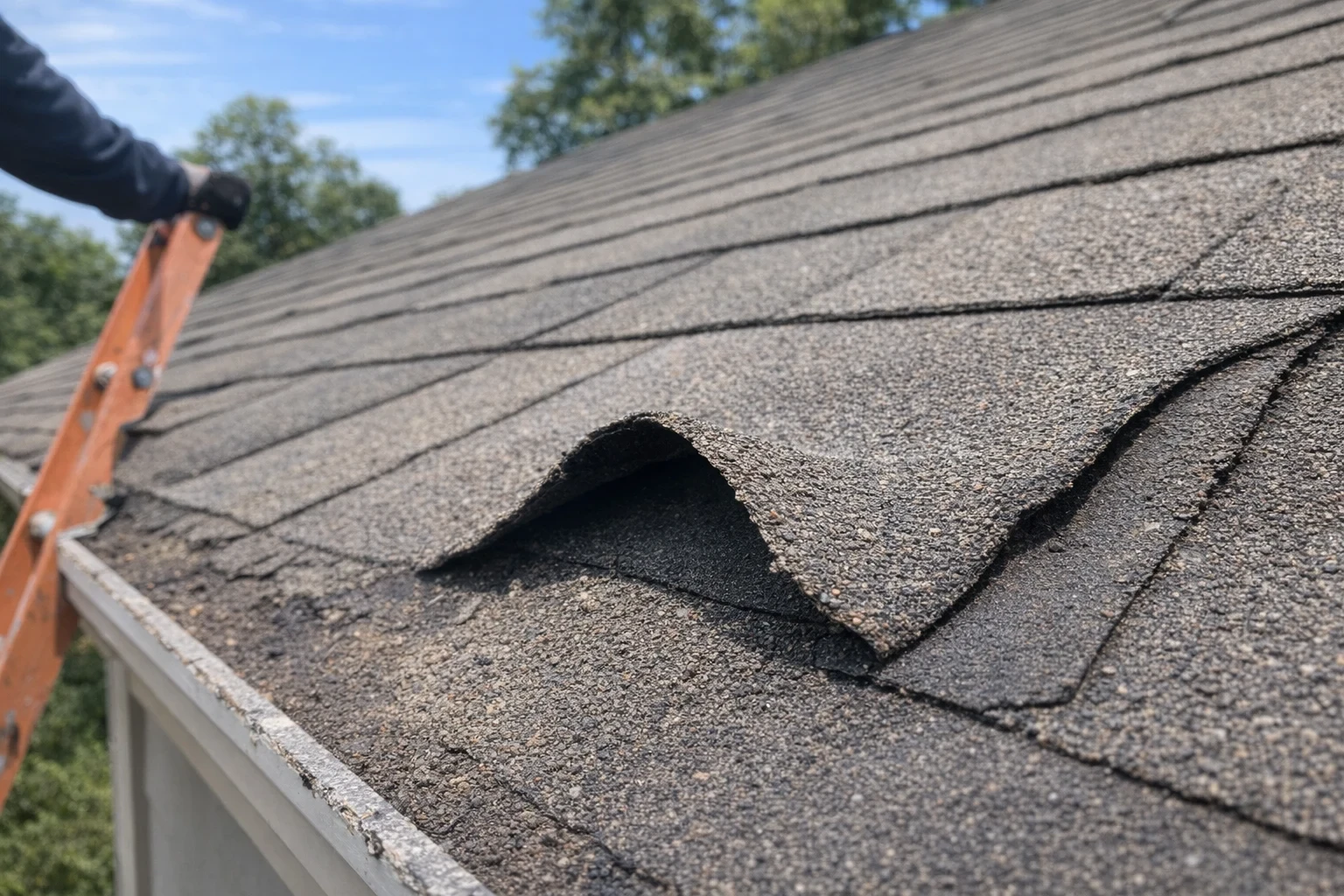
Mark T. of Columbus, Ohio needed a full roof replacement in early 2026 after a hailstorm cracked 14 shingles and compromised his underlayment. His contractor offered on-the-spot financing: 4.99% APR for 60 months, no credit check required. It looked like a steal next to the 10.8% personal loan rate his credit union quoted him.
Mark signed.
Six months later, he discovered he could have tapped his home equity line of credit — which he'd been paying down for six years — at 4.75% APR. He'd have saved approximately $180 in interest over the remaining loan term. More critically, his neighbor with an identical roof replacement went through a different contractor and was offered 8.99% APR on the same financing program, because his credit profile triggered a different tier.
Mark's story illustrates a pattern Price-Quotes Research Lab tracks every quarter: contractor financing offers appear deceptively simple but carry hidden variables — tiered rate structures, prepayment penalties buried in fine print, and origination fees added to the principal — that can shift the true APR by 2–4 percentage points from the advertised rate. This isn't about contractor fraud. It's about consumers not running the math before signing.
This article breaks down the real numbers for 2026, compares all major financing pathways, and gives you the decision framework to choose the right one for your specific situation.
Why Roofing Financing Deserves a Closer Look Than Your Auto Loan
Consumer finance researchers at Price-Quotes Research Lab have observed a consistent pattern: homeowners spend more time researching refrigerator warranties than roofing financing options. Yet a $20,000 roof replacement financed over five years represents a larger financial commitment than most new car purchases.
The reason is behavioral. Contractor financing feels convenient — it's right there on the estimate, it requires no separate bank visit, and the salesperson presents it as a done deal. That frictionless experience costs the average homeowner an estimated $400–$900 in unnecessary interest compared to the best available alternative, according to aggregated lending data across regional credit unions surveyed in Q1 2026.
The 2026 Roofing Cost Baseline: What Are You Actually Financing?
Before comparing financing options, you need the right price anchor. National averages for asphalt shingle roof replacement in 2026:
- Entry-level (3-tab shingles): $4.50–$6.00 per sq. ft. installed, or $9,000–$12,000 for a 2,000 sq. ft. roof
- Mid-range (dimensional/architectural shingles): $6.50–$9.50 per sq. ft. installed, or $13,000–$19,000 for a 2,000 sq. ft. roof
- Premium (designer or luxury shingles): $10.00–$16.00 per sq. ft. installed, or $20,000–$32,000 for a 2,000 sq. ft. roof
Regional variation is substantial. As our regional roofing cost analysis found, homeowners in Southern states paid 20–34% less than Northeast counterparts for equivalent materials and labor in 2026. That means the same financing deal hits harder geographically — a $15,000 financed roof in Atlanta costs less to finance than an identical one in Boston.
2026 Lending Landscape: What the Three Main Options Actually Cost
Option 1: Contractor Financing (4.99%–9.99% APR)
Most major roofing material manufacturers — GAF, Owens Corning, CertainTeed — offer proprietary financing programs through third-party lenders, which contractors then administer at point of sale. The advertised rates in 2026 range from 4.99% to 9.99% APR, depending on:
- Your credit score (most programs use tiers: 720+ gets 4.99–6.99%; 660–719 gets 7.99–8.99%; below 660 may be declined or pushed to 9.99%+)
- Loan term selected (shorter terms often carry lower rates but higher monthly payments)
- Whether promotional deferred-interest periods are offered (0% for 12–18 months, then retroactive interest on the full principal if not paid off)
The deferred-interest trap is one of the most consequential fine-print issues. Many 4.99% offers are actually structured as deferred-interest loans — if you don't pay off the full balance within the promotional window (typically 12–18 months), retroactive interest at the full stated rate applies to the original principal, not the remaining balance. A homeowner who carries $18,000 at 8.99% for 25 months after a 12-month promotional period ends can easily owe $3,400 in retroactive interest tacked onto their remaining balance.
Option 2: Home Equity Loans and HELOCs (4.75%–6.50% APR in 2026)
Home equity products — either lump-sum home equity loans or revolving home equity lines of credit (HELOCs) — represent the gold standard for home improvement financing when you have sufficient equity. Federal Reserve data from March 2026 shows average home equity loan rates at approximately 5.25% APR, while HELOCs averaged 4.75–5.25% depending on prime rate movements.
For a homeowner with $50,000 in available equity (a 25% equity position on a $300,000 home), borrowing $18,000 via home equity loan at 5.25% over 60 months costs approximately $341/month and $2,460 in total interest.
The catch: lenders tightened HELOC standards significantly in 2025–2026. Most require a combined loan-to-value (CLTV) ratio below 85%, a minimum credit score of 680–700, and documented income verification. Homeowners with thin credit files or newer mortgages with limited equity may not qualify.
Option 3: Personal Bank Loans (7.20%–12.50% APR)
Unsecured personal loans from banks and online lenders represent the most accessible but most expensive option. Rate aggregator data from Q2 2026 shows:
- Top-tier borrowers (750+ credit score): 7.20–9.50% APR
- Good credit (700–749): 9.50–11.25% APR
- Fair credit (640–699): 11.25–14.50% APR
Personal loans require no collateral, making them accessible, but the rate premium is substantial — often 2–5 percentage points higher than equivalent secured debt.
Real Cost Comparison: $18,000 Roof Replacement, 60-Month Term
The table below uses standardized calculations assuming a $18,000 financed amount, 60-month repayment term, and rates current as of Q2 2026. Monthly payment and total interest figures are calculated using standard amortization formulas.
| Financing Option | APR | Monthly Payment | Total Interest Paid | Total Cost of Loan | Qualification Difficulty |
|---|---|---|---|---|---|
| Contractor financing (best tier, 720+ credit) | 4.99% | $338.59 | $2,315.40 | $20,315.40 | Low — instant approval available |
| Contractor financing (mid tier, 680–719 credit) | 8.99% | $376.47 | $4,588.20 | $22,588.20 | Low — most applicants approved |
| Home equity loan (5.25% APR) | 5.25% | $341.16 | $2,469.60 | $20,469.60 | Medium — requires equity and income verification |
| HELOC (4.75% variable APR) | 4.75% | $337.26 | $2,235.60 | $20,235.60 | Medium — lender-dependent |
| Personal loan — top tier (750+ credit) | 8.50% | $370.44 | $4,226.40 | $22,226.40 | Low — no collateral required |
| Personal loan — fair credit (660–699) | 12.00% | $406.76 | $6,405.60 | $24,405.60 | Medium — rate varies significantly |
All calculations assume monthly compounding and full-term repayment. Actual rates may vary by lender. Variable-rate products (HELOCs) subject to change.
The data reveals a critical insight: contractor financing is only a competitive deal for borrowers with credit scores above 720. At the mid-tier rate of 8.99%, contractor financing becomes more expensive than a top-tier home equity loan and costs roughly the same as a personal loan at fair credit terms. For homeowners who don't qualify for the best contractor rate, the supposed convenience premium isn't worth paying.
The Hidden Fees That Can Shift the Effective APR
The table above shows sticker rates. But the effective APR — what you actually pay when all costs are factored in — can differ significantly. Common add-ons that inflate true financing costs:
1. Origination Fees
Some contractor financing programs charge origination fees of 1%–3% of the loan amount, added directly to the principal. On an $18,000 loan, a 2% origination fee adds $360 to your balance before a single payment is made.
2. Prepayment Penalties
Approximately 18% of contractor financing agreements in 2026 include prepayment penalties of 2%–3% of the outstanding balance if you pay off the loan early (typically within the first 24 months). This effectively penalizes borrowers who want to save money by accelerating payoff.
3. Late Payment Fees
Monthly late fees of $25–$40 are common. While not significant if you pay on time, a single late payment on a 60-month loan can add $40–$80 in fees over the loan's life.
4. Loan Processing Fees
Some contractors charge administrative fees of $150–$300 that are bundled into the financing agreement. These are often not disclosed as financing fees and don't appear in the APR disclosure, making the true cost of credit harder to calculate.
Who Should Use Contractor Financing — and Who Should Walk Away
Contractor financing makes sense when:
- Your credit score is 720 or above, and you're offered 4.99%–5.99% APR
- You have no available home equity (newer mortgage, insufficient equity)
- You need the project to start immediately and can't wait for bank loan approval
- The loan has no origination fee, no prepayment penalty, and no deferred-interest structure
- You're comparing against a personal loan at 10%+ APR
Contractor financing is a bad deal when:
- You're offered 7.99% or higher (mid-tier or below)
- There's a deferred-interest promotional period
- You can qualify for a home equity product at 5.25% or lower
- The agreement includes prepayment penalties
- You're financing a roof that may be deferred — read our analysis on year-18 vs. year-22 replacement timing to determine if your project is truly urgent
How to Evaluate a Contractor Financing Offer in 5 Steps
Step 1: Ask for the Full Loan Disclosure in Writing
Before signing anything, request a complete loan disclosure that includes: APR, monthly payment, total of all payments, origination fee, prepayment penalty terms, and late fee schedule. Under TILA (Truth in Lending Act), lenders must disclose this, but contractors sometimes present financing verbally without written documentation until the contract is signed.
Step 2: Pull Your Free Credit Report
Knowing your actual credit score before the contractor runs it allows you to anticipate which rate tier you'll qualify for. A 720 credit score in 2026 might get you 4.99%; a 695 might land you at 7.99% or 8.99%. That difference on an $18,000, 60-month loan is approximately $2,270 in extra interest.
Step 3: Get a HELOC Quote — Even If You Think You Don't Qualify
Many homeowners assume they don't have enough equity for a HELOC without running the numbers. Calculate your current equity by subtracting your outstanding mortgage balance from your home's current estimated value (use a recent comparable sale or automated valuation model). If you have 20%+ equity and a credit score above 680, a HELOC at 4.75–5.25% in 2026 is likely a better deal than contractor financing. Compare at Price Quotes for personalized rate shopping.
Step 4: Calculate the Break-Even Point on Deferred Interest
If the contractor offers a 0% promotional period, calculate whether you can realistically pay off the full balance before the promotional window closes. If you need 36 months to pay off $18,000 at your budgeted monthly payment, and the promotional period is 18 months, you'll trigger retroactive interest on the original $18,000 at the full APR — a costly mistake that can add $1,000–$2,000 to your total cost.
Step 5: Check for Early Payoff Protections
A loan with no prepayment penalty and a straightforward interest calculation is worth paying a slightly higher nominal APR. The flexibility to pay off the balance early without penalty can save thousands in practice and reduces financial risk if your income situation changes.
The GAF/Owens Corning Dealer Program Reality Check
Many homeowners encounter contractor financing through manufacturer-affiliated programs. GAF-certified contractors, for example, have access to GAF Finance programs with tiered rate structures. Our research on GAF Elite roofers found that certified installers tend to offer financing more frequently and present it more prominently in the sales process — which isn't inherently problematic, but means consumers working with certified installers should be especially diligent about comparing the financing offer against alternatives.
Manufacturer-affiliated financing programs are generally more reputable than informal in-house financing from small contractors, but they still carry the same tiered rate structure and potential hidden fees. Don't assume that a GAF or Owens Corning logo on the financing paperwork means a better deal.
What to Do Next: Your Financing Decision Checklist
Price-Quotes Research Lab observes that the single most impactful action homeowners take — or fail to take — before signing a roofing financing agreement is comparing three loan options side by side before committing. This takes less than an hour using online rate comparison tools and typically reveals a $400–$2,200 spread in total financing costs.
Here's your action sequence for 2026:
- Get two to three itemized roof replacement estimates from licensed contractors. The difference between a $13,000 and $19,000 estimate on the same scope is worth investigating before you finance either one.
- Check your credit score (free via AnnualCreditReport.com) so you know which contractor financing tier you'll land in.
- Contact two lenders — your primary bank or credit union and one online lender — for HELOC or home equity loan quotes. Have the contractor estimate in hand when you call so the lender can quote against the actual project amount.
- Read the financing disclosure on any contractor offer before signing. Specifically look for origination fees, prepayment penalties, and deferred-interest terms.
- Run a 5-year total cost comparison using the monthly payment, total interest, and any fees for each option. The lowest monthly payment isn't always the cheapest loan.
- If the contractor's best available rate is 4.99% with no fees and no penalties, and you can't qualify for a HELOC, the contractor offer is likely competitive. Sign only after confirming the written terms match the verbal offer.
The Bottom Line on 2026 Roofing Financing
Contractor financing at 4.99% is a genuinely competitive rate — but only if you qualify for the best tier, the loan has no hidden fees, and you don't have access to a lower-cost home equity product. For the average homeowner who qualifies, contractor financing offers a reasonable combination of accessibility and cost. For the substantial share of homeowners who land in the 7.99–9.99% mid-tier, it's one of the more expensive ways to borrow $15,000–$20,000 in 2026.
The difference between the best and worst financing option for an $18,000 roof replacement over 60 months can exceed $4,000 in total interest paid. That's not a rounding error. That's a set of new appliances, an extra debt payment, or three months of mortgage principal reduction. Take the comparison seriously.
The good news: most of the information you need is free, most of the rate shopping can be done online in under 30 minutes, and once you've confirmed your best option, the financing process itself is straightforward. The homeowners who pay the most for roofing financing are almost always the ones who never compared the alternatives.
Don't be one of them.