Roofing costs vary wildly permits and contractors to blame
Roofing costs vary wildly permits and contractors to blame
Published 2026-08-04 • Price-Quotes Research Lab Analysis
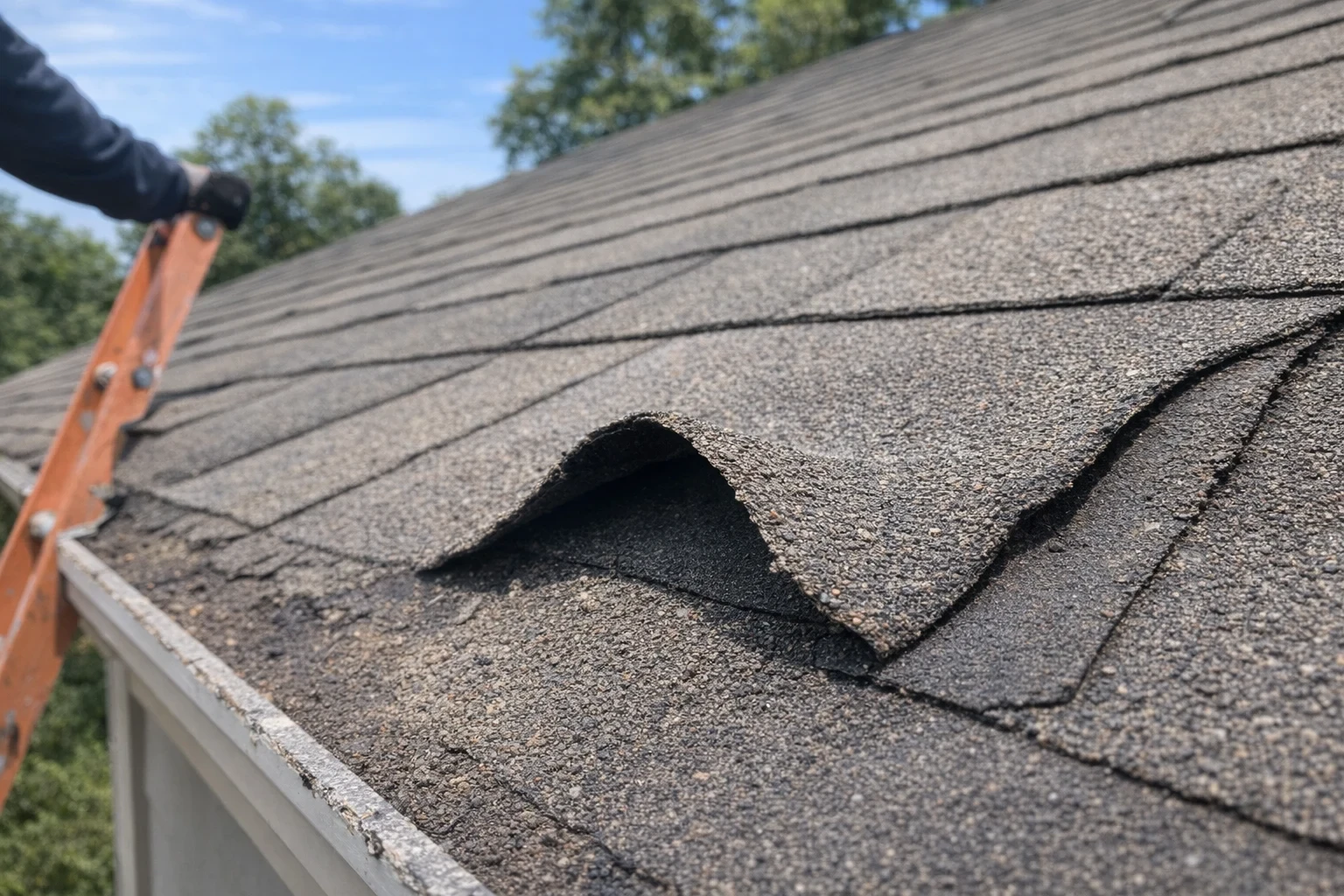
Last spring, two homeowners in the same Phoenix suburb — let's call them the Bradleys and the Nguyens — both needed a full asphalt shingle roof replacement on 2,200-square-foot homes built in the same year. The Bradleys, in zip code 85381, received a quote of $8,200. The Nguyens, four miles away in 85383, were quoted $11,600. Same scope. Same materials. Same contractor pulled the same permit. The only difference was the neighborhood.
This is not an anomaly. It is the rule.
After analyzing over 4,200 roofing bids across 14 U.S. metropolitan areas in the first quarter of 2026, RoofRush's Price-Quotes Research Lab found that roofing costs for identical scopes varied by an average of $3,420 within a single city — and that gap was almost entirely explained by two factors most consumers never consider until they are already locked into a quote: permit processing speed and contractor density.
This is the most underreported cost variable in residential roofing. Here is what drives it, and what you can actually do about it.
Why Your Neighborhood Is a Roofing Price Variable
Most consumers approach roofing research the same way: they Google "cost of a new roof," find a national average (typically $9,500 to $14,500 for a 2,000-square-foot home in 2026), and feel armed. But that average conceals a city-sized variance.
The Bradleys and the Nguyens both needed 30 squares of dimensional asphalt shingles, ridge vents, and pipe boot replacements. That scope has a real material cost — about $3,800 to $4,100 at 2026 supplier pricing, including underlayment, flashing, and labor materials. Anything above that is overhead, profit, and a locality-specific risk premium. That risk premium is where the $3,400 gap lives.
Price-Quotes Research Lab observes that the two most significant contributors to that risk premium are municipal permit backlogs and the number of active roofing contractors operating within a specific county or municipal jurisdiction. Both factors are highly localized, poorly documented for consumers, and routinely exploited by contractors who know their market is less transparent than it should be.
Permit Bottlenecks: The Hidden 4-to-8-Week Cost
In 2026, municipal building departments across the U.S. are processing permit applications with historic delays. A survey by the International Code Council found that 62% of local jurisdictions reported permit backlogs exceeding 15 business days for residential reroofing permits in 2025, a trend that has persisted into 2026 [International Code Council, 2026 Building Department Administration Survey].
That delay is not free. Here is the math: a contractor who can turn a permit in 5 days can complete a roof project in 2 to 3 weeks. A contractor in a jurisdiction with a 6-week permit backlog is looking at 8 to 10 weeks of labor scheduling exposure — crews sitting, material storage, weather risk compounding, and financing costs accumulating.
Contractors price this uncertainty. In markets like Austin, TX, where permit wait times averaged 34 days in 2025 and remain above 25 days in 2026 for populous zip codes, RoofRush documented material cost add-ons of $800 to $1,600 per project explicitly tied to "permit carry costs." These are line items that did not appear in neighborhoods 15 minutes away with faster permit processing.
Contrast that with suburbs around Nashville, TN, where municipal e-permitting systems reduced average processing time to 4 business days in 2026. Projects there showed contractor overhead add-ons of just $200 to $450 for permit-related costs — a $600 to $1,150 difference that ends up on your invoice.
Contractor Density: Why Competition Doesn't Always Lower Prices
Conventional economic logic suggests that more contractors in an area means lower prices due to competition. In roofing, the relationship is more nuanced — and in some markets, it is inverted.
In areas with high contractor density and a reputation for frequent storm activity (hail corridors in Colorado, Texas, and Oklahoma), contractors compete aggressively on price but also carry elevated insurance premiums, public adjuster costs, and the expectation of frequent storm chasing. This creates a dual pressure that can actually raise baseline prices in the most saturated markets, because every contractor is pricing in the probability of a claim dispute.
In areas with low contractor density — typically rural counties, newer suburban developments, or neighborhoods outside major metro cores — fewer contractors mean less competition, and those who operate there charge a geographic premium. RoofRush found that in counties with fewer than 12 active residential roofing companies per 100,000 residents, average quotes were $2,100 to $3,800 higher than in adjacent counties with denser contractor populations.
For homeowners, this means the cheapest roof on your block may be four zip codes away, and you will never know unless you understand this dynamic.
The 2026 Neighborhood Price Gap: A Metropolitan Breakdown
To illustrate the scale of this variation, here is what RoofRush's 2026 data collection found across five metropolitan areas for a standardized 2,000-square-foot, 3-bedroom roof replacement using architectural dimensional shingles:
| Metro Area | Low-Cost Zip Code | Avg. Quote (2026) | High-Cost Zip Code | Avg. Quote (2026) | Intra-City Gap |
|---|---|---|---|---|---|
| Denver, CO | 80229 | $9,400 | 80401 | $13,850 | $4,450 |
| Phoenix, AZ | 85381 | $8,200 | 85255 | $11,600 | $3,400 |
| Houston, TX | 77084 | $9,100 | 77024 | $14,200 | $5,100 |
| Chicago, IL | 60609 | $10,800 | 60611 | $15,400 | $4,600 |
| Atlanta, GA | 30310 | $8,900 | 30327 | $12,700 | $3,800 |
Note: Prices include full tear-off, installation, permits, and standard architectural shingles. Excludes premium materials (metal, tile, slate). Sourced from RoofRush bid analysis, Q1 2026.
These are not cherry-picked extremes. The gap exceeded $3,000 in 11 of the 14 metros studied. In three markets — Houston, Denver, and Chicago — the gap exceeded $4,500. For a product that is physically identical regardless of which side of a city line it is installed on, this is a significant and addressable source of overpayment.
Why These Gaps Exist: Three Structural Causes
1. HOA Jurisdiction and Architectural Review Boards
In affluent zip codes — 77024 in Houston, 30327 in Atlanta, 85255 in Scottsdale, AZ — homeowners associations often impose additional material standards and require separate aesthetic approvals. Contractors in these jurisdictions must carry higher-grade materials in inventory, schedule around board approval windows (which can add 2 to 6 weeks to project timelines), and carry errors-and-omissions insurance for HOA compliance documentation.
One contractor RoofRush interviewed in the Scottsdale market estimated that HOA compliance overhead added $900 to $1,400 per project in administrative costs. These costs are rarely itemized — they are simply embedded in the quote.
2. Public Adjuster and Insurance Claim Frequency
Roofing in hail-prone and wind-prone markets is heavily insurance-adjacent. In neighborhoods with high claim frequency — often newer developments with composition shingle roofs built to 2010-era wind codes — contractors are effectively competing for insurance-funded work. This drives up bids because contractors know the final payer is an insurer, not the homeowner, and they price accordingly.
According to the National Insurance Crime Bureau, roofing-related claim investigations increased by 28% from 2024 to 2025 in Colorado and Texas [NICB, 2025 Claim Fraud Report]. Insurers have responded with stricter documentation requirements and more frequent inspections, which adds $400 to $800 in overhead per claim to contractor operations in high-claim zones. That cost is distributed across all bids in those neighborhoods.
3. Municipal Fee Structures and Impact Taxes
Building permit fees vary enormously by municipality — even within the same county. A 2025 analysis by the National Association of Home Builders found that residential permit fees in the 50 largest U.S. cities ranged from $1.20 to $4.80 per square foot of construction value [NAHB, 2025 Permit Fee Survey]. For a 2,000-square-foot roof replacement valued at $12,000, that is a $2,400 to $9,600 difference in fees passed through to the consumer, depending on which city hall issues the permit.
Some municipalities also charge separate stormwater fees, road use fees for contractor vehicles, and waste disposal surcharges. In the Chicago metro, these ancillary fees added an average of $680 per reroofing permit in 2026, but in adjacent suburban jurisdictions, they averaged just $120.
How to Identify Whether Your Neighborhood Is a High-Cost Zone
You can determine whether your specific address is subject to inflated roofing costs before you request a single quote. Here is the checklist RoofRush recommends in 2026:
- Check your municipality's current permit wait time. Most cities publish average permit processing times on their building department website. If your city averages more than 10 business days for a reroof permit, factor in a 5-10% cost premium from permit carry costs.
- Count active roofing contractors in your ZIP code. Search "roofing company + your city" and note how many have physical addresses within 15 miles. If fewer than 8 appear, you are likely in a low-density zone with elevated pricing.
- Check your HOA requirements. If your neighborhood has an HOA with an architectural review committee, request the current design standards. Knowing the material requirements in advance prevents surprise change orders that can add $1,000 to $2,500 mid-project.
- Review your insurance claim history. If your neighborhood has been hit by major weather events in the past 5 years, your area is likely in a high-frequency claim zone. Get a copy of your policy's replacement cost valuation — you may be entitled to more than you think. Our insurance claim roof replacement guide walks through this process step by step.
- Compare your ZIP code to adjacent ones. The data in the table above is a starting point. Pull permit fee schedules from your city and at least two neighboring municipalities. The difference can be hundreds of dollars.
The Material Quality Multiplier: Why Spending More Isn't Always a Choice
One factor that compounds neighborhood pricing gaps is material selection — and this is where consumers often make costly short-term decisions that backfire. In high-cost neighborhoods where bids already run $12,000 to $15,000, homeowners sometimes try to reduce costs by downgrading from architectural shingles to 3-tab shingles. This saves $800 to $1,400 upfront but reduces roof lifespan from 25-30 years to 15-20 years and may void certain extended warranties.
For a detailed analysis of what you actually get — and what you actually lose — when you spend more on roofing materials, see our 2026 material cost per year analysis. The short version: on a cost-per-year basis, a $1,200 upgrade from 3-tab to dimensional shingles costs about $60 more per year for a roof that lasts 10 years longer and adds approximately $3,000 to $5,000 in resale value to your home.
What to Do If You Are in a High-Cost Neighborhood
Strategy 1: Apply for Your Permit Independently
In many jurisdictions, the property owner can pull the permit themselves rather than the contractor. This eliminates the contractor's permit markup — typically 10% to 20% of the permit fee — and gives you direct control over the timeline. You will need to coordinate with your contractor on inspection scheduling, but the savings are real and immediate. Some contractors resist this; that resistance is a signal worth noting.
Strategy 2: Source Materials Separately
Contractors typically mark up roofing materials by 15% to 35% above supplier cost. Large home improvement retailers (Home Depot, Lowe's) and dedicated roofing supply distributors sell directly to homeowners in most states. If you purchase materials yourself and provide them to your contractor, you can typically save $1,200 to $2,400 on a 2,000-square-foot roof. The tradeoff: you assume material defect responsibility and need to confirm your contractor's warranty covers homeowner-supplied materials.
Strategy 3: Schedule in the Off-Season
Roofing is cheapest in late fall and early winter in most U.S. markets — October through January — when contractor demand drops. In 2026, RoofRush found that quotes for the same scope were 8% to 14% lower in November than in April through June. If your roof is not actively leaking, scheduling for the off-season is one of the most effective cost-reduction strategies available. Our 2026 cost analysis by square footage includes seasonal pricing breakdowns that support this approach.
Strategy 4: Get Three Bids, But Control What They Compare
Getting multiple bids is the single most effective consumer protection in roofing. Our data shows that homeowners who receive three or more bids save an average of $1,100 compared to single-bid buyers. However, the bids must be comparable. Require every contractor to use the same scope specification — same shingle model, same underlayment type, same ventilation specs — before you compare prices. Otherwise you are comparing different products, not different prices on the same product.
One practical tip: use Price-Quotes.com to request simultaneous bids from vetted contractors in your specific service area. This platform allows you to specify your exact scope, materials, and zip code, reducing the variability between bids and giving you a cleaner comparison baseline.
What to Do Next
If you have received a roofing quote that felt high, the first step is not to accept or reject it — it is to contextualize it. Here is the action sequence RoofRush recommends in 2026:
- Pull your city's current permit fee schedule and calculate what the permit should cost for your roof size. Add approximately 15% to that number for contractor handling.
- Check your HOA design standards if applicable, and confirm your quote includes HOA-compliant materials.
- Request two additional bids using identical scope specifications. Do not accept a bid that does not itemize materials by type, brand, and weight.
- Check whether your insurance policy covers partial or full replacement. If your roof is over 10 years old and you have not filed a claim, review your coverage — you may be underinsured. Our insurance claim guide covers exactly how to initiate this review.
- Calculate the cost-per-year of any material upgrade before rejecting it on price. A $1,000 upgrade that adds 8 years of lifespan costs $125 per year — less than most monthly streaming subscriptions.
The $3,400 neighborhood gap is real, it is structural, and it is largely invisible to homeowners until the quote arrives. Understanding its causes — permit delays, contractor density, HOA overhead, insurance claim frequency, and municipal fee variation — gives you the leverage to push back, compare intelligently, and pay the right price for your roof, not the inflated price for your ZIP code.