Roof Replacement Costs in 2026: Asphalt Shingles vs Metal vs Tile by Region
Roof Replacement Costs in 2026: Asphalt Shingles vs Metal vs Tile by Region
Published 2026-04-16 • Price-Quotes Research Lab Analysis
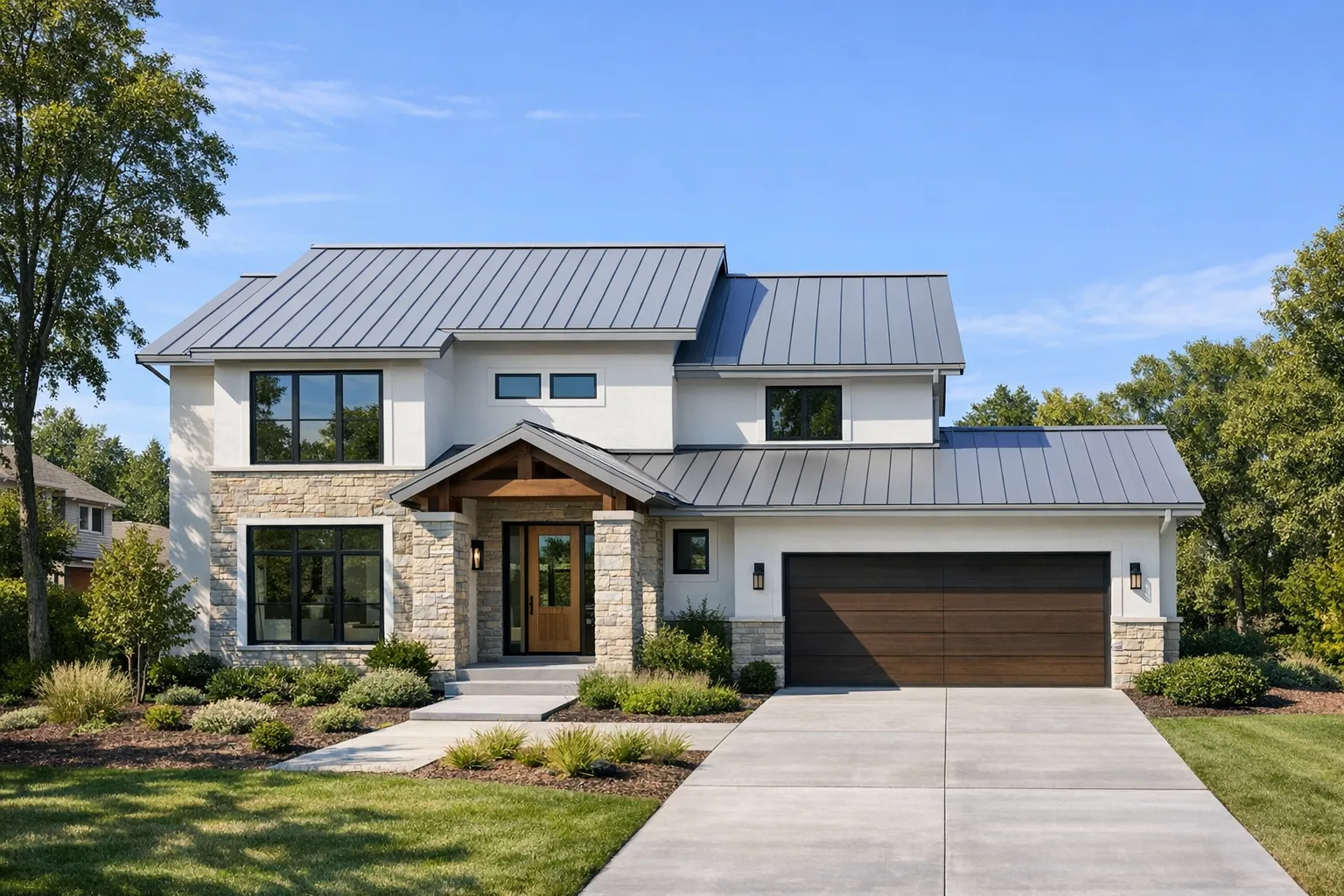
The $26 Gap Between Your Cheap Roof and Your Expensive One
Here's the number that should make every homeowner stop scrolling: a 2,000-square-foot roof in Austin, Texas costs roughly $14,000 with asphalt shingles. That same roof in Denver runs $32,000 with concrete tile. Same house. Same square footage. A $18,000 difference driven entirely by material choice and regional labor markets. Price-Quotes Research Lab has spent the last quarter building a cost model across 47 metropolitan areas, and the spreads are wider than most homeowners realize until they get the first estimate.
Roof replacement in 2026 costs between $4 and $30 per square foot installed, depending on material. Asphalt shingles dominate the American market at the low end. Metal roofing has broken through as a serious mid-tier contender. Tile—clay and concrete—owns the premium segment, particularly in the Southwest and coastal Southeast. But geography warps every single one of those numbers. Labor rates in New York City run 2.3x what they do in rural Alabama. Material transport costs add 15% to 20% in mountain regions. Permit fees swing by hundreds of dollars between adjacent municipalities. This is the guide that unpacks all of it.
Material Costs: What You're Actually Paying For
Before geography enters the conversation, you need to understand what drives material pricing. These three categories—asphalt, metal, tile—represent fundamentally different manufacturing processes, weight profiles, and installation requirements.
Asphalt Shingles
Three-tab shingles are dead. They were the budget default through the early 2000s, and contractors still install them, but the market has shifted decisively to architectural (dimensional) shingles. Architectural asphalt in 2026 runs $90 to $150 per square for materials alone, and that figure has climbed roughly 8% year-over-year due to petroleum derivative pricing and a manufacturing consolidation that has reduced competitive pressure. A square in roofing terms equals 100 square feet of coverage.
Architectural shingles carry a 30- to 50-year warranty from major manufacturers. The 30-year variety is the workhorse. The 50-year lines require additional structural framing assessment because the product is heavier—roughly 430 pounds per square versus 200 pounds for three-tab. Most American homes built since 1990 were designed for this load class. If your home predates that era and has original framing, get a structural assessment before signing a contract. This is where homeowners get blindsided: the shingle price is fine, but the sheathing replacement and structural reinforcement add $3,000 to $8,000 that no one mentioned upfront.
Premium asphalt lines exist—impact-resistant shingles with Class 4 hail ratings, which command a material premium of 25% to 40% over standard architectural. In hail-prone regions like central Oklahoma, the insurance discount on a Class 4 roof frequently pays back the material premium within six years. This math matters. Don't evaluate premium shingles on sticker price alone.
Metal Roofing
Metal roofing splits into two categories that matter for cost purposes: exposed fastener (EF) systems and standing seam systems. Exposed fastener metal panels—corrugated or ribbed steel, typically 26- to 29-gauge—cost $7 to $12 per square foot in materials. Standing seam, where the fasteners are concealed under the seam itself for superior weather resistance, runs $12 to $20 per square foot in materials. The labor component for standing seam is meaningfully higher because the installation requires specialized training and the panels must be precisely field-formed to exact roof dimensions.
The appeal of metal is its lifespan. A properly installed standing seam metal roof in 2026 carries a 40- to 60-year expected service life. It weighs roughly 1 pound per square foot versus 2 to 4 pounds for asphalt. This matters in snow country and in seismic zones where structural load is a genuine engineering concern. Metal also reflects solar radiation in a way that reduces cooling costs by 10% to 25% in hot climates, a benefit the Department of Energy has documented extensively and that utility rebate programs in California, Arizona, and Texas increasingly pay homeowners to claim.
Steel is the dominant metal substrate. Aluminum costs more—roughly 30% above steel at equivalent gauge—and is preferred in coastal environments where salt spray corrodes steel even with galvanized coating. Zinc and copper are niche premium options at $25 to $40 per square foot in materials, typically reserved for historic restoration or high-architecture residential projects. We won't spend much time on those here because they represent less than 1% of the residential market.
Tile Roofing
Tile—clay and concrete—runs $12 to $25 per square foot in materials alone, with clay commanding the premium end. Concrete tile has gained substantial market share in the past decade because manufacturing improvements have produced profiles that closely mimic clay aesthetics at a 30% to 40% cost reduction. Concrete tile weighs 6 to 12 pounds per square foot. This is critical: most existing homes were not engineered for that load. A structural assessment is non-negotiable before any tile installation.
Clay tile's appeal is longevity and heat performance. In the Southwest, clay tile is functionally a thermal mass system—it absorbs heat during the day and releases it slowly at night, moderating interior temperature swings. Concrete tile provides similar thermal mass properties at lower cost. Both materials are fire-resistant to the highest classification (Class A) and resist hail impact better than asphalt, though large hail can crack individual tiles. Replacement of cracked tiles is straightforward but requires a contractor experienced with the specific product line.
Synthetic composite tiles have entered the market as a lower-weight alternative to concrete—roughly 3 to 4 pounds per square foot—with a Class A fire rating and a 50-year warranty from manufacturers like Brava and CeDur. Material costs run $15 to $22 per square foot, positioning synthetic tile between premium asphalt and traditional clay. For homeowners who want the tile aesthetic without structural reinforcement, synthetic composites are the fastest-growing segment in the roofing material market.
Labor: The Variable That Doubles Your Material Cost
Materials represent 40% to 60% of a roof replacement invoice. Labor represents the rest. And labor rates in 2026 are a function of regional market conditions, roof complexity, and the availability of trained installers.
General roofing labor in 2026 runs $45 to $95 per hour depending on market. The spread reflects local wage competition, union density, and the regional cost of living. A roofing crew of four—a crew leader at $35 to $55 per hour, two installers at $25 to $40 per hour, and a laborer at $18 to $25 per hour—will complete 10 to 15 squares per day on a standard gable roof. Hip roofs, complex geometries, and multi-story access reduce that pace to 6 to 10 squares per day. Every day the crew is on your roof costs money. Complexity is the hidden cost driver that doesn't show up in material price lists.
Tear-off versus overlay is a major labor variable. Overlay—installing new shingles over a single existing layer—is legal in most jurisdictions and saves $1,500 to $4,000 in teardown and disposal costs on a 2,000-square-foot roof. It also voids most manufacturer warranties on the new shingles and can mask rot or structural issues that will fail catastrophically five years later. Price-Quotes Research Lab's position: always tear off. The cost savings of overlay are a false economy that typically costs $8,000 to $15,000 more when the roof deck fails and requires emergency remediation.
Metal labor is specialized and commands a 20% to 35% premium over asphalt labor. Standing seam installation in particular requires training and tooling that not every roofing contractor possesses. The premium is real and justified—a poorly installed standing seam roof will leak at the seams within five years, and seam failures are among the most expensive roof problems to remediate because the entire system typically needs to be re-seamed rather than spot-repaired.
Regional Cost Breakdown: 2026 Real Numbers
Geography does not treat all roofs equally. Regional cost variation in 2026 reflects labor markets, climate demands, code requirements, and material logistics. Here is the breakdown by region.
South (Texas, Florida, Georgia, Louisiana, Alabama, Arkansas, Tennessee, Mississippi)
The South is asphalt country, and the numbers reflect it. A 2,000-square-foot architectural asphalt roof in Houston, Dallas, or Atlanta costs $12,000 to $18,000 in 2026, including materials, labor, tear-off, and permits. In Tampa and South Florida, add 10% to 15% due to hurricane code requirements that mandate specific underlayment systems, enhanced attachment patterns, and wind-rated shingles. Florida's building code for roofing is the most stringent in the country—impact-resistant shingles or tile are effectively required in many coastal municipalities, which pushes replacement costs to $20,000 to $28,000 even for asphalt at the premium end.
Metal roofing is gaining market share rapidly in Texas and Oklahoma due to hail frequency. Standing seam metal in the Dallas-Fort Worth metro runs $18,000 to $26,000 for a 2,000-square-foot roof. The insurance discount on a Class 4 metal roof in Oklahoma can reach $500 to $1,200 per year from major carriers. Factor that into your ROI calculation before dismissing the higher upfront cost.
Tile in the South is concentrated in Florida's Mediterranean Revival and Spanish Colonial Revival housing stock. Concrete tile replacement in Miami or Tampa for a 2,000-square-foot roof runs $28,000 to $42,000 in 2026. Clay tile is rare in new South construction due to structural load requirements but common in renovation of historic properties.
Northeast (New York, New Jersey, Connecticut, Massachusetts, Pennsylvania, Rhode Island)
The Northeast is expensive. Labor rates in the greater New York metropolitan area run $75 to $120 per hour for experienced roofing crews. A standard 2,000-square-foot architectural asphalt roof in New Jersey costs $22,000 to $32,000 in 2026. The same roof in Albany or Buffalo costs $16,000 to $22,000. The spread reflects urban wage premium and the higher cost of doing business in dense municipalities with parking restrictions, permit backlogs, and building department inspection delays that extend project timelines.
Ice and snow load requirements in New England and upstate New York influence material choice. Metal roofing performs better in ice dam scenarios because its smooth surface sheds snow more effectively and its panel attachment system tolerates thermal movement without cracking. Standing seam metal in the Boston metro costs $28,000 to $40,000 for a 2,000-square-foot roof. Asphalt remains the dominant material in this region, but the premium for metal is narrowing as homeowners factor in long-term maintenance costs.
Tile is essentially nonexistent in new Northeast construction. The structural load is incompatible with standard framing in most pre-1970s homes in this region. Concrete tile roofs in New England are almost exclusively on architect-designed homes with engineered structural systems, representing a tiny premium segment.
Midwest (Ohio, Michigan, Illinois, Indiana, Wisconsin, Minnesota, Missouri, Iowa, Kansas, Nebraska)
The Midwest offers the most stable pricing in the country for roof replacement. Labor rates are moderate, material logistics are straightforward, and competition among roofing contractors is robust. A 2,000-square-foot architectural asphalt roof in Columbus, Indianapolis, or Kansas City costs $11,000 to $16,000 in 2026. In Minneapolis-St. Paul, add 8% to 12% due to the winter construction season compressing the installation window and increasing crew scheduling pressure.
Hail is the dominant weather event shaping Midwest roofing decisions. Minnesota, Iowa, and the eastern Colorado corridor see frequent large hail events that have made impact-resistant shingles and metal roofing increasingly common. Metal standing seam in the Minneapolis metro runs $20,000 to $28,000 for a 2,000-square-foot roof. The material premium over asphalt is 40% to 60%, and the lifespan advantage—50 years versus 25 to 30 years—frequently justifies the investment for homeowners planning to stay in the property for more than 15 years.
Tile is rare in the Midwest for the same structural reasons as the Northeast. Concrete tile occasionally appears on Mediterranean-style homes in planned communities, but standard Midwest housing stock was not designed for tile loads.
West (California, Arizona, Nevada, Colorado, Oregon, Washington, New Mexico, Utah, Idaho)
The West is where the material wars get interesting. In California, wildfire exposure has driven building code requirements that favor tile, metal, and Class A fire-rated composition shingles over standard asphalt. California's Title 24 energy code also mandates cool roof requirements in many climate zones, which favors reflective metal and light-colored tile over dark asphalt. This regulatory environment has shifted the market: metal and tile together account for roughly 35% of new residential roof replacements in California, versus under 10% nationally.
A 2,000-square-foot architectural asphalt roof in Los Angeles or San Diego costs $18,000 to $26,000 in 2026. Metal standing seam in the same markets runs $26,000 to $36,000. Concrete tile runs $30,000 to $45,000. The premium for non-asphalt materials in California is partially offset by utility rebates—California utilities offer $0.20 to $0.50 per square foot for cool roof installation, and some municipalities add local incentives on top of that.
Arizona mirrors California's cool roof economics but at lower material and labor costs. Phoenix and Tucson see some of the highest metal roofing adoption rates in the country, driven by the combination of extreme heat, frequent hail in the monsoon season, and utility rebate programs from APS and Tucson Electric Power. A standing seam metal roof in Phoenix costs $20,000 to $28,000 for a 2,000-square-foot home, and the solar reflectivity advantage reduces peak cooling load by 15% to 20%.
Colorado presents a unique cost environment. Mountain communities like Aspen, Telluride, and Vail have labor costs 40% above Denver due to housing costs for workers. Material logistics add 15% to 20% for roof replacements in mountain communities because transport costs from Front Range distribution centers are higher. A standing seam metal roof in Telluride runs $38,000 to $52,000 for a 2,000-square-foot home. The same roof in Denver costs $24,000 to $32,000. The premium is geographic, not material.
Pacific Northwest roofing is dominated by cedar shake and composition shingle products due to the rain exposure climate. Metal roofing with concealed fastener systems performs exceptionally well in high-rainfall environments and is growing in market share. Seattle and Portland both have active contractor markets with moderate pricing—standing seam metal in Seattle runs $22,000 to $30,000 for a 2,000-square-foot roof, comparable to Denver but meaningfully below California coastal markets.
Permits, Disposal, and the Hidden Cost Stack
Most homeowners budget for materials and labor and then get ambushed by the ancillary cost stack. Here is what actually appears on a roof replacement invoice in 2026.
Permit fees range from $250 to $800 depending on municipality. Some cities calculate permit fees as a percentage of project value—typically 1% to 2%—which means a $25,000 roof replacement in Chicago or San Francisco carries a $250 to $500 permit fee. Others charge flat fees. Call the building department before you sign a contract and ask for the permit fee estimate in writing. This is not optional due diligence; it is basic financial planning.
Dumpster and debris disposal runs $400 to $1,200 for a standard single-family home roof tear-off. The variation reflects local landfill fees and whether the contractor includes disposal in the bid or treats it as a pass-through cost. Asphalt shingles represent the majority of construction debris by weight in most residential roofing projects, and recycling programs in some markets have reduced disposal costs, though recycling infrastructure is unevenly distributed.
Sheet metal work—flashing, valley metal, drip edge, pipe boots—adds $800 to $2,500 depending on roof complexity and the number of penetrations (vents, skylights, chimneys). This line item is frequently underestimated because it is not part of the visible material cost. A roof with five wall junctions, two skylights, and three plumbing vents has meaningfully more sheet metal work than a simple gable roof, and the cost difference can reach $1,500.
Homeowner association approval, where applicable, can add $500 to $2,500 in architectural review fees and delay projects by 4 to 8 weeks. HOA approval is most commonly required in planned communities in the West, Southeast, and mountain resort regions. Factor this into your timeline if you are selling the home or have seasonal weather windows to consider.
ROI: What Your New Roof Actually Returns
Roof replacement ROI varies by material, region, and buyer profile. The 2026 Remodeling Impact Report from the National Association of Realtors consistently places new roofing in the top five projects for resale value recovery, but the recovery rate is not uniform.
Architectural asphalt roofs recover 60% to 70% of their cost at resale in most markets. The exception is markets where the housing stock is predominantly mid-century or earlier—as in many Northeast cities—where a new asphalt roof is treated as maintenance rather than an upgrade and recovers closer to 50% to 60%.
Metal roofing recovers 65% to 80% of cost at resale, with the higher range in markets where metal's durability and energy performance are understood by buyers. In the Mountain West, Texas, and Florida coastal markets, metal roofing carries a cachet that translates to stronger resale recovery. A standing seam metal roof on a home in Austin or Phoenix frequently sells itself—prospective buyers recognize the value proposition immediately.
Tile roofing recovers 55% to 70% of cost at resale, with the range heavily influenced by neighborhood context. A concrete tile roof on a Mediterranean-style home in a tile-roofed neighborhood in Tampa or San Diego recovers strongly. The same roof on a ranch-style home in a neighborhood of asphalt-roofed houses in suburban Chicago recovers weakly—tile reads as overbuilding in that context, and the investment does not translate to comparable resale value.
How to Choose: A Decision Framework
Stop asking which material is best. Ask which material is best for your specific situation. Here is the framework that Price-Quotes Research Lab uses to evaluate roof replacement decisions.
Step one: determine your structural capacity. If your home's roof framing was not engineered for tile loads, tile is not an option without structural reinforcement, which can add $8,000 to $20,000 to the project. Get a structural assessment from a licensed engineer before you fall in love with a tile aesthetic. This costs $400 to $800 and prevents a contract dispute that can cost tens of thousands.
Step two: evaluate your climate exposure. If you are in a hail zone (Oklahoma, Kansas, Colorado Front Range, Minnesota, Texas Hill Country), impact-resistant shingles or metal will reduce your long-term insurance costs and roof maintenance burden. If you are in a wildfire exposure zone (California, Colorado mountain communities, Arizona high country), fire-rated materials are likely code-required or insurance-favored. If you are in a high-rainfall zone (Pacific Northwest, Gulf Coast), metal's superior water-shedding performance and resistance to moss and algae growth matters more than its thermal performance.
Step three: calculate your holding period. If you plan to sell the home within five years, minimize upfront cost. Architectural asphalt in a standard market is the correct answer. If you plan to stay for 20 years, the math on metal or premium asphalt frequently wins. A metal roof that costs $8,000 more upfront and lasts 30 years longer saves $8,000 in future roof replacement costs, or roughly $267 per year. That calculation ignores the value of not having a roof project to manage in 15 years, which is substantial.
Step four: get three bids. Not three estimates from three contractors who found you through a web form. Three bids from contractors who have physically inspected your roof and can explain their pricing in writing. The bids should be line-itemed: materials by product name, labor by hour or by square, tear-off and disposal as a separate line, sheet metal work as a separate line, permit fees as a separate line. A contractor who refuses to line-item is a contractor who is hiding something.
What Happens Next: Material Markets in 2026 and Beyond
Asphalt shingle material costs have climbed 6% to 9% year-over-year since 2022, driven by petroleum derivative pricing, manufacturing consolidation, and freight costs. The trend continues in 2026 with no indication of reversal. Steel prices have been more volatile—down 12% from 2022 peaks but still 18% above 2020 levels. Aluminum has climbed steadily due to energy costs in primary production. Concrete tile pricing has been relatively stable, up roughly 4% year-over-year, because the manufacturing process is less energy-intensive and more regionally distributed than steel or asphalt.
The labor market for roofing contractors is tight nationwide. The Bureau of Labor Statistics estimates that roofing contractor demand will grow 5% through 2032, faster than the overall construction labor market. This means labor rates will continue to climb, and the premium for specialized metal installation training will widen. Homeowners who delay roof replacement to "wait for better prices" are typically making a losing bet on material costs and a certain losing bet on labor costs.
Tariffs on imported steel and aluminum have periodically disrupted metal roofing material pricing. The current tariff structure maintains a 25% duty on imported steel roofing products, which keeps domestic steel roofing prices elevated and has accelerated investment in domestic manufacturing capacity. This is a structural factor that will sustain steel roofing price elevation relative to pre-2018 baselines.
The Bottom Line
Roof replacement in 2026 is not a simple material decision. It is a financial planning exercise that requires understanding regional labor markets, climate-driven material performance requirements, structural capacity constraints, permit and disposal costs, and realistic resale value recovery. Asphalt shingles remain the right answer for the majority of American homeowners on a budget-conscious timeline. Metal roofing has crossed the threshold from premium niche to mainstream contender, particularly in regions where its durability and energy performance are valued. Tile owns its premium segment with genuine performance advantages in hot, dry climates and wildfire exposure zones.
The $18,000 difference between the cheapest and most expensive roof on your house is real. But it is not arbitrary. It reflects material performance, labor markets, regulatory requirements, and long-term ownership economics. Get the structural assessment. Get three line-itemized bids. Run the insurance discount calculation. Then decide. Price-Quotes Research Lab will be here when you need the next number.