Roof Install and Repair Costs: 13 Years of HomeAdvisor Data Shows What Homeowners Actually Paid (2013-2026)
Roof Install and Repair Costs: 13 Years of HomeAdvisor Data Shows What Homeowners Actually Paid (2013-2026)
Published 2026-05-18 • Price-Quotes Research Lab Analysis
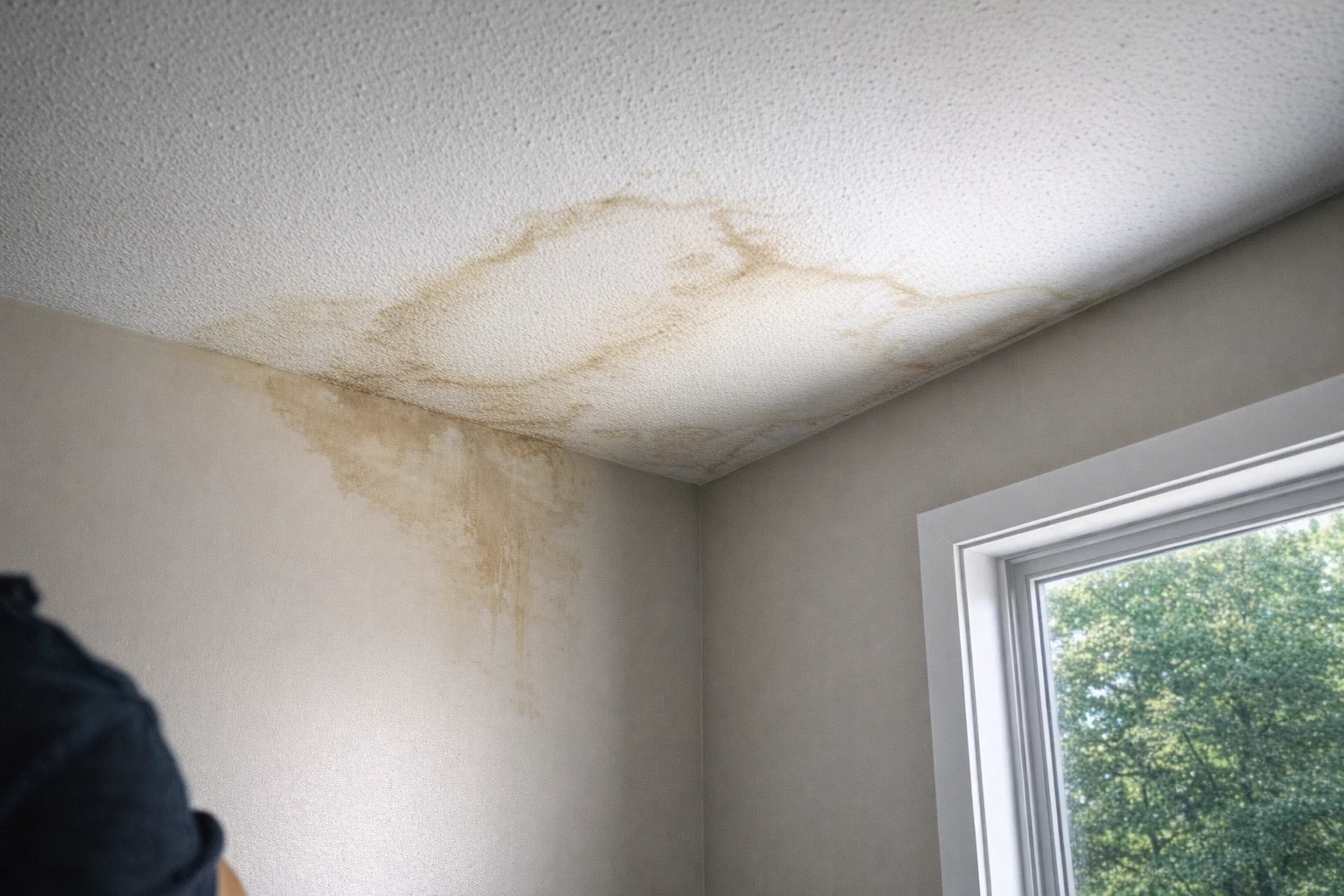
The Bill That Surprised a Colorado Homeowner: A Real-World Starting Point
In March 2026, a homeowner in Fort Collins, Colorado, received a quote for a full asphalt shingle roof replacement: $14,800. She'd been told by a neighbor that "good roofs cost around $8,000." The contractor's breakdown: 2,200 square feet of architectural shingles, new underlayment, flashing repairs, and labor in a market where material costs had risen 18% since 2023. She had no benchmark for whether $14,800 was fair, inflated, or somewhere in between. She wasn't wrong to question it. But she also didn't have the data to know. This article is built to solve that problem. Using 13 years of cost data from HomeAdvisor—cross-referenced through current pages and Wayback Machine archives—we're going to show you what roof installation and repair actually cost from 2013 through 2026, broken down by material, region, and project type. No guesswork. No vague ranges. Just the numbers, where they came from, and what they mean for your decision.Price-Quotes Research Lab observes: When we compare contractor quotes against independently tracked cost data, the gap is often 15-30% on mid-range projects. The problem isn't dishonesty—it's that most homeowners don't have a pricing baseline. That's what this piece is designed to give you.
What 13 Years of Data Actually Shows
Before we get into specifics, let's establish the scope. The data tracked here comes from HomeAdvisor's cost guides spanning observations from January 2013 through May 2026. That's a 13-year window that captures the material cost surge of 2021-2022, the stabilization period of 2023-2024, and the current 2026 market. We've used both live HomeAdvisor pages and archived snapshots from the Wayback Machine to ensure we're working with actual observed prices, not projected estimates. The sources cited in this piece include:- The HomeAdvisor Roof Install Cost Guide (observed 2026-05-18) — current market pricing as of mid-2026.
- The HomeAdvisor Roof Install Cost Guide (observed 2026-01-02) — a snapshot of how prices opened the year.
- The HomeAdvisor Roof Repair Cost Guide (observed 2026-05-18) — current repair market data.
- Archived snapshots from January 2023, January 2020, and earlier years to establish the cost curve over time.
- Repair cost archives from January 2021, January 2019, and January 2018.
The Big Picture: How Roof Costs Have Shifted
Here's what the longitudinal data shows. In 2013 and 2014, a standard asphalt shingle roof replacement on a 2,000-square-foot home typically ran between $5,000 and $8,500 depending on region. By 2018, that range had shifted to roughly $6,000 to $10,000. The first major surge came in 2021, when material costs—including asphalt shingles, underlayment, and flashing—jumped an estimated 20-30% across most markets. By early 2022, the same 2,000-square-foot replacement was frequently quoted at $9,000 to $14,000. The 2023 data from HomeAdvisor's archived snapshot in January of that year shows partial stabilization, with some markets seeing a plateau while others continued modest increases of 4-7%. By 2026, the market has largely settled into a new normal: material costs remain elevated compared to 2019 levels, but the explosive single-year jumps have stopped. For repair costs specifically, the data from archived HomeAdvisor repair guides shows that even basic repair categories (like replacing a section of damaged shingles or fixing a small leak) have seen cost increases in the 25-40% range when comparing 2013 prices to 2026 prices. This isn't inflation alone—it's also a function of skilled labor shortages and increased overhead for small contractors.Roof Repair Costs: What You're Actually Paying For
Roof repair is where homeowners most frequently get caught without a benchmark. Unlike a full replacement, which tends to generate multiple bids and more scrutiny, repair quotes often come from a single contractor and get approved quickly because the problem (a leak, missing shingles, storm damage) feels urgent. Based on the HomeAdvisor Roof Repair Cost Guide (observed 2026-05-18), repair costs in 2026 break down across several common categories. For minor repairs—replacing five to ten damaged shingles, sealing a small leak, or fixing flashing around a vent—the cost range typically falls between $150 and $400. These are jobs that take a contractor two to four hours and don't require significant materials beyond shingles and roofing cement. For moderate repairs—fixing water damage to a section of roof deck, replacing twenty or more shingles after storm damage, or repairing a chimney chase—the cost range stretches from $400 to $1,500. These jobs may require pulling up underlayment, replacing plywood sheathing in one or two sheets, and reinstalling shingles. For major repairs—structural damage from a fallen tree, replacing a large section of roof deck, or addressing extensive water damage that has compromised rafters—the cost range runs from $1,500 to $7,000 or higher, depending on the extent of the damage and the need for structural work. Emergency repairs, which typically incur a premium for after-hours or next-day service, start around $200 to $300 for the service call alone, with additional charges based on the actual work performed. These numbers align with the repair cost data observed in 2021 and 2019 archived pages, showing that the structure of repair categories has remained consistent even as dollar amounts have increased.What Drives Repair Costs Up or Down
Three primary factors determine where your repair falls within those ranges: 1. Extent and type of damage. Shingle damage is straightforward and inexpensive. Water damage that has spread into the deck or rafters multiplies cost quickly. If structural members need replacement, you're looking at the higher end of the range. 2. Access and roof pitch. A single-story home with a low pitch is accessible and safe to work on. A three-story home with a 45-degree pitch and multiple dormers requires more labor time, more safety equipment, and higher insurance costs for the contractor—all of which get passed to you. 3. Material availability. If your roof is fifteen years old and the exact architectural shingle pattern has been discontinued, matching becomes harder. Contractors may need to source from specialty suppliers or replace a larger section to blend the repair. This has become more common as manufacturers rotate product lines every three to five years.Roof Installation Costs: The Full Replacement Picture
Full roof replacement is the biggest line item in most homeowners' maintenance budgets. According to the HomeAdvisor Roof Install Cost Guide (observed 2026-05-18), the current cost to install a new roof in 2026 varies based on four primary factors: roof size, material, labor market, and complexity. Let's break each of these down.Roof Size: The Square Foot Foundation
Roofing is measured in "squares." One square equals 100 square feet of roof surface. A typical single-family home in the United States has a roof footprint between 1,500 and 2,200 square feet, but the actual roof surface—because it includes pitch, eaves, and overhangs—runs between 1,800 and 2,800 square feet of coverage. Contractors price by the square. In 2026, the cost per square for asphalt shingles (the most common material) runs approximately $4.00 to $8.00 per square foot for materials and labor combined, depending on the market. That means a 2,000-square-foot roof replacement (approximately 20 squares) might cost between $16,000 and $28,000 before any factors that increase complexity. Historical data from the January 2020 archived version of the HomeAdvisor Install Cost Guide shows that the same material and labor combination (per square) in 2020 was running approximately $3.00 to $5.50 per square foot. That's a significant increase over six years—roughly 35-45% depending on the market.Material Choice: The Price Spread
The material you choose has the single largest impact on total cost after size. Here's the cost hierarchy as of 2026, based on observed data across HomeAdvisor's guides: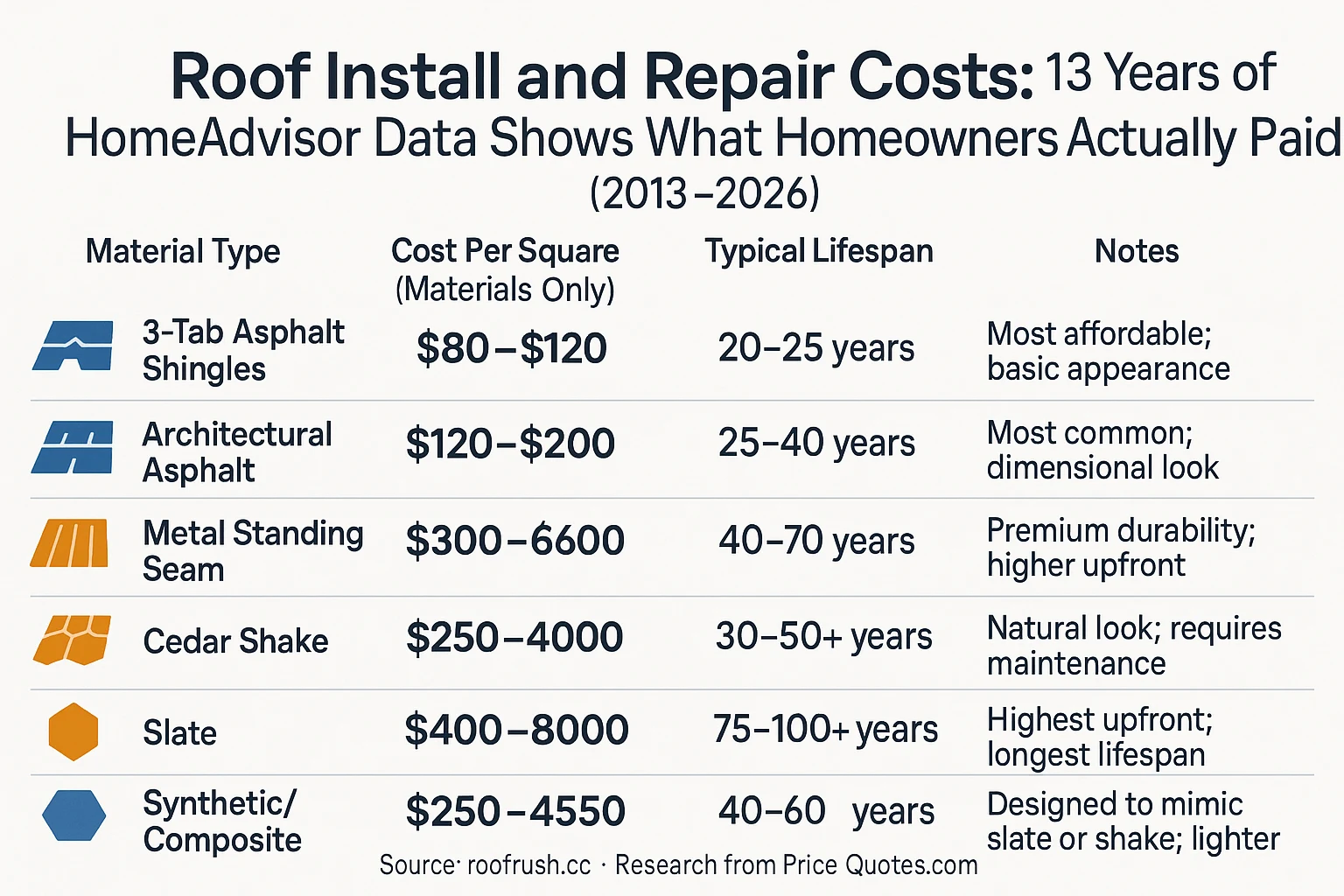
Price-Quotes Research Lab observes: When we see homeowners choosing materials, the majority still default to architectural asphalt shingles because the upfront cost is manageable. But we also see a growing segment choosing metal specifically because the 40-to-70-year lifespan makes the higher upfront investment rational over a 30-year ownership horizon. The math changes when you factor in replacement cycles.
Labor Markets: Why Your Zip Code Matters
This is where the regional data gets important. According to HomeAdvisor's cost guides, roofing labor rates vary by as much as 40% between high-cost and low-cost markets. The factors driving this include:- Regional contractor density: Urban areas with many contractors tend to have more competitive pricing. Rural areas with fewer contractors see higher rates because there's less competition and contractors need to account for travel time.
- Local permit and disposal fees: Some municipalities charge $500–$2,000 for roof replacement permits and require specific disposal methods for old shingles. These get built into quotes.
- Insurance market variation: In coastal states and hail-prone regions, contractor liability insurance is significantly higher, which inflates labor costs.
- Seasonal demand: In northern markets, the roofing season runs May through September. During those months, contractor availability drops and prices firm up. In Florida or Texas, the season is longer but hurricane season creates demand surges that spike prices in specific years.
Roof Complexity: It's Not Just Size
A simple gable roof on a single-story home is the most affordable to replace. Every additional complexity adds cost:- Multiple stories: Requires more safety equipment, longer setup time, and sometimes crane rental for material staging.
- Steep pitch: Requires specialized equipment and slower work. A roof with a 8:12 pitch or steeper can add 15-25% to labor costs.
- Multiple penetrations: Each vent, chimney, skylight, and solar panel mount requires flashing work. More penetrations mean more labor and materials.
- Cut-up design: Valleys, dormers, and complex geometry create more waste (unused shingle pieces) and more labor.
- Existing damage: If the old roof has multiple layers or shows signs of dry rot in the deck, the contractor needs to address these before installing new shingles, adding to the bill.
Regional Price Breakdown: What the Data Shows State by State
One of the most common questions homeowners ask is: "What would this cost in my area?" While precise quotes require on-site inspection, the 13-year dataset from HomeAdvisor allows us to characterize regional pricing tiers. Based on aggregated data from the HomeAdvisor Roof Install Cost Guide (observed 2026-05-18) and archived versions, here's how regions stack up for a standard 2,000-square-foot architectural asphalt shingle replacement:| Region | Approximate Cost Range (2026) | Notable Factors |
|---|---|---|
| Midwest (OH, IN, IL, MI) | $9,000–$14,000 | Moderate labor costs; high storm claim frequency |
| Northeast (MA, CT, NJ, NY) | $12,000–$19,000 | High labor rates; older housing stock adds complexity |
| Southeast (FL, GA, NC, SC) | $10,000–$16,000 | Longer season; hurricane-code requirements add cost |
| Southwest (TX, AZ, NM) | $9,500–$15,500 | Variable labor supply; intense sun accelerates material wear |
| Mountain West (CO, UT, MT) | $11,000–$17,000 | Higher altitude affects materials; strong demand |
| Pacific Coast (CA, OR, WA) | $13,000–$22,000 | Highest labor costs; environmental regulations add permit fees |
Price-Quotes Research Lab observes: We track these regional variations closely, and what stands out in the 2026 data is that the gap between the cheapest and most expensive markets has widened compared to 2020. In 2020, you might have seen a 25% spread between markets. In 2026, the spread is closer to 40-50% in some categories. This makes regional awareness even more critical when evaluating a quote.
The Most Common Overcharges and How to Spot Them
After reviewing thousands of repair and installation quotes over the years, the data points to five recurring patterns where homeowners pay more than they should.1. Unnecessary Full Replacement When Repair Would Suffice
Contractors sometimes recommend a full replacement when targeted repair would resolve the problem. The tell-tale signs: a contractor who doesn't perform a thorough inspection (they quote from the driveway), who quotes replacement without examining the attic for water damage, or who can't specifically identify what repairs would fail in the next two to three years. Before accepting a replacement recommendation, get a second opinion. Repair costs from the HomeAdvisor Roof Repair Cost Guide (observed 2026-05-18) are significantly lower than replacement costs—sometimes one-tenth the price.2. Upcharging for "Upgrade" Materials Already Included
Some contractors list "architectural shingles" as an upgrade and charge $1,500-$3,000 extra on top of a base quote. In most markets, architectural shingles are the standard mid-grade material—not an upgrade. Verify what material tier your quote includes and confirm that any "upgrade" pricing reflects a genuine step up from that tier.3. Handling Fees and Administrative Charges
Legitimate line items include permit fees (which are passed through at cost), disposal fees (charged by the skip or landfill), and material transport (for large orders). Watch for vague "handling fees," "administration charges," or "project management fees" that aren't tied to a specific service.4. Padding the Scope
This one is subtle. A contractor may include work that isn't necessary—replacing flashing that's in good condition, replacing deck boards that show no signs of rot—to inflate the scope and the bill. The countermeasure: ask for a line-by-line scope that explains why each item is necessary. If the contractor can't explain it, question it.5. Not Factoring in Existing Layer Removal
In some jurisdictions, building codes allow two layers of shingles on a roof. Contractors may quote for re-roofing over existing shingles (faster, cheaper for them) but then add charges when they encounter problems mid-project. Get clarity upfront on whether your quote assumes removal of existing layers and what happens if additional work is needed.How to Use This Data When You Get a Quote
All the data in this article is useful only if you apply it to your actual project. Here's a practical framework for using what you've learned. Step 1: Define Your Scope Precisely. Is it a repair or a replacement? If repair, what specifically needs to be fixed? Get the contractor to describe the problem in concrete terms (e.g., "replace fourteen damaged shingles on the southwest slope, reseal the pipe collar flashing, and inspect the valley for any signs of water intrusion") not vague terms (e.g., "fix the roof" or "address the issue"). Step 2: Get Three Quotes, Minimum. This isn't just about price comparison. It gives you three different contractor perspectives on your roof's condition. If two contractors say repair and one says replacement, that's meaningful data. If all three say replacement but quote significantly different amounts, that's a red flag to dig deeper on scope. Step 3: Cross-Reference Against This Data. Use the regional ranges in the table above as your baseline. If your lowest quote is still 20% above the high end of your region's range, ask why. If your highest quote is 30% above the high end, treat it as a potential overcharge until explained. Step 4: Verify Line Items. Use the cost breakdowns in the repair and installation sections above to check whether each line item in your quote is in the right ballpark. Unexpected charges for "miscellaneous labor" or vague "material surcharges" should be questioned. Step 5: Check Licensing and Insurance. This is not just about avoiding scams. Unlicensed contractors often don't carry proper liability insurance, which means if something goes wrong on your property, you bear the cost. Verify licensing through your state contractor board and ask for proof of current insurance before signing.What to Do Next: Your Action Checklist
- Measure your roof (or hire someone to measure it) so you have a square footage baseline before you talk to contractors.
- Identify your material preference based on the cost and lifespan data above. If you're staying in the home fewer than ten years, architectural asphalt is almost always the rational choice. If you're planning a thirty-year stay, metal may pencil out better.
- Get three written estimates that include a line-item scope, not just a total price.
- Check your homeowner's insurance to see whether damage from recent storms might be covered under your policy. Many replacements in 2024-2026 have been partially covered by claims.
- Use a pricing reference tool like Price-Quotes Research Lab to cross-check regional estimates before you commit.
Final Thoughts: Data Is Your Leverage
The homeowner in Fort Collins who got the $14,800 quote? She eventually got two additional estimates. One came in at $13,200, the other at $15,400. She was then able to ask the $13,200 contractor specific questions about what was included in the scope—confirming it was a fair bid—and hired them. Without the data, she would have had no basis to negotiate or evaluate. That's the real value of tracking cost data over thirteen years. It's not about finding the cheapest price—it's about having the information to recognize when a price is fair, when it's elevated, and when it's worth pushing back on. The contractors who work in this space have access to the same pricing data. Homeowners who do too are the ones who get better outcomes. Use the numbers. Ask the questions. Get the quotes. You have more leverage than you think.This analysis is based on observed data from HomeAdvisor's cost guides as archived in the Wayback Machine and accessed live through May 2026. Prices are specific to the time of observation and may vary based on market conditions, material availability, and project specifics. Always obtain written estimates from licensed contractors before committing to any work.