The Insurance Claim Roof Replacement Guide: What Adjusters Look For and What Gets Denied
The Insurance Claim Roof Replacement Guide: What Adjusters Look For and What Gets Denied
Published 2026-04-10 • Price-Quotes Research Lab Analysis
The Number That Should Terrify Every Homeowner
Insurers deny roughly 40% of all homeowner claims annually. That means four out of every ten policyholders walking into a negotiation with their own insurance company walks out with nothing—or far less than they deserve. For roof replacements, where costs routinely climb past $15,000 to $30,000, that denial rate represents a financial catastrophe waiting to happen to someone you probably know. Price-Quotes Research Lab has spent months pulling apart the claims process, interviewing adjusters, and tracking exactly what separates approved claims from rejected ones. The findings will reshape how you think about your next storm.
Why Your Roof Claim Is a Negotiation, Not a Form
Most homeowners imagine filing an insurance claim as a bureaucratic exercise. You report damage, someone comes out, you get a check. That framing is backwards and it costs people money. Filing a roof insurance claim is entering a formal negotiation where your adversary—the insurance company—has sent a trained professional whose job is to minimize what the company pays out. That professional is the insurance adjuster, and understanding how they work is the entire game.
The adjuster who shows up at your house does not work for you. They work for the insurer. Their assessment determines whether your claim gets approved, denied, or most insidiously, undervalued. The gap between what your roof actually costs to replace and what an adjuster initially values it at can run tens of thousands of dollars. The National Roof Certification & Inspection Association notes that an independent roof inspection for an insurance claim provides critical leverage—an unbiased third-party report documenting the true extent of damage gives you the credible evidence needed to secure a fair settlement rather than whatever number the insurer's adjuster pulls from thin air.
The 40% Denial Rate: Breaking Down Why Claims Fail
Homeowners insurance policies are written to cover sudden, accidental damage—not the slow grinding entropy of an aging roof. This distinction drives nearly every denial you'll encounter. The policy covers damage from hailstorms, windstorms, falling trees, and similar acute events. It does not cover wear and tear, missing shingles that flew off years ago, or a membrane that's been drying out since the Obama administration.
When an adjuster arrives, they're trained to distinguish between new storm damage and pre-existing deterioration. A PitchGauge analysis of adjuster inspections identifies three core evaluation areas: overall roof condition including age and materials, signs of weather-related damage like broken shingles or hail dents, and evidence of maintenance or neglect that preceded the claimed event. If your roof looks like it's been ignored for fifteen years, the adjuster will argue that every visible problem predates the storm. In most cases, they'll be partially right, and that partial rightness gives them legal grounds to shave thousands off your claim.
What Adjusters Actually Look For During Inspection
The inspection itself follows a predictable pattern, and knowing it gives you an enormous advantage. Adjusters arrive with checklists, and they apply those checklists with mechanical precision. Here's exactly what they're evaluating.
Roof Age and Material Type
Every shingle has a lifespan. Three-tab asphalt lasts roughly 20 years. Architectural asphalt holds up 25 to 30 years. Metal roofs push 50 years or more. When the adjuster pulls permits or checks satellite imagery and estimates your roof's installation date, they're running the math on depreciation. An older roof triggers Actual Cash Value calculations instead of Replacement Cost Value. The difference is brutal. ACV pays you what your damaged roof is worth today—accounting for years of wear—while RCV pays what it costs to build new. A 28-year-old shingle roof might generate a $22,000 RCV estimate but collapse to a $9,000 ACV payment once depreciation takes its cut. RoofQuotes documents this gap extensively, noting that roof age directly determines whether you receive full replacement value or a depreciated fraction.
Hail Damage Signatures
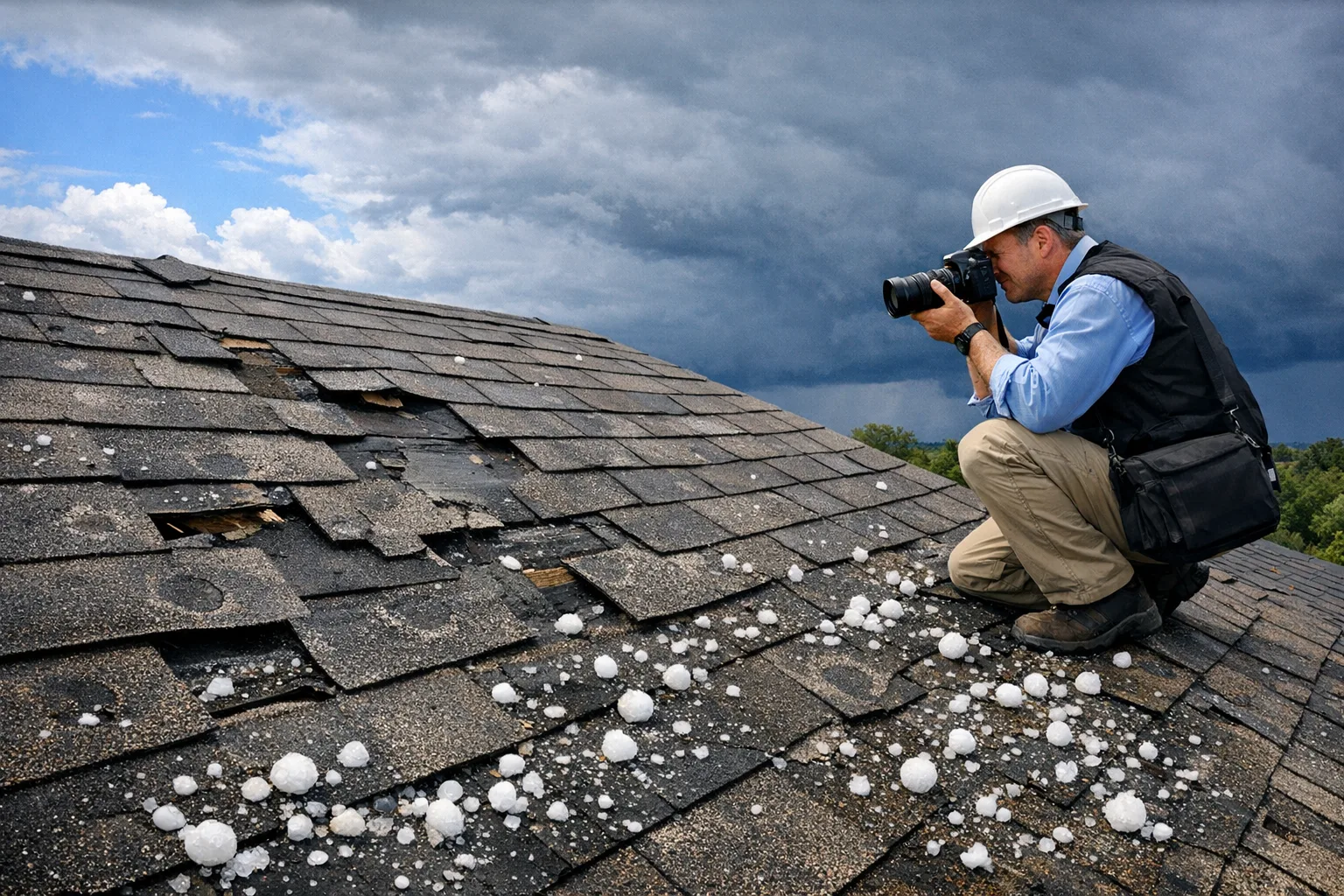
Hail creates distinctive patterns that experienced adjusters can spot from the ground and confirm on the surface. They look for bruising in the mat beneath shingles, dents in metal flashing, spatter marks on vents and gutters, and the granular loss pattern where hailstones knock the protective ceramic coating off asphalt shingles. The key word is pattern. Random damage scattered across a roof looks like wear. Concentrated, consistent impact patterns that align with storm track data from your area's weather records prove hail. This is where documentation before the adjuster arrives becomes critical.
Wind Damage Indicators
Wind claims require evidence of shingles that were properly sealed at installation but have since lifted, creased, or torn away entirely. Adjusters look for a specific pattern: shingles on the windward side of the roof showing uplift damage, fasteners that backed out, and sealant strips that failed. Wind damage often concentrates along edges and ridges where pressure differentials are highest. A comprehensive guide from Eagle Watch Roofing explains that wind claims fail when homeowners cannot demonstrate that damage followed a specific wind event rather than accumulated stress over years of exposure.
Flashing, Ventilation, and Secondary Damage
The adjuster won't just look at shingles. They'll inspect chimney flashing, vent boots, ridge caps, and any penetration points where water could theoretically enter. They know that interior water stains don't automatically prove roof damage—a plumbing leak or condensation issue can create identical evidence. They will look for corresponding exterior damage at the location directly above any interior staining. If there's a stain in your bedroom ceiling but no matching exterior breach, the adjuster has grounds to deny the interior damage portion of your claim entirely.
The Documentation Strategy That Separates Winners from Losers
Professional roofers who work insurance claims for a living understand something most homeowners don't: you need your own documentation before the insurance adjuster arrives. This isn't optional padding. It's the foundation of any successful negotiation.
Schedule an independent inspection with a licensed roofing contractor the same day or the day after a major storm. This contractor should provide a written inspection report with photographs, measurements, and a line-item damage assessment. This report becomes your baseline. When the insurance adjuster arrives and begins their evaluation, you have documentation showing what damage existed and what it costs to repair. Without it, you're trusting the insurer's adjuster to document their own liability fairly, which is like trusting a defense attorney to present the prosecution's case objectively.
PACC Solutions recommends gathering multiple line-item quotes from local licensed roofers as part of this documentation strategy. These quotes verify fair pricing and protect against storm chaser scams—contractors who descend on disaster areas, pressure homeowners into signing over their insurance claims, and then perform shoddy work while billing the insurer for premium materials. Multiple quotes give you market-rate ammunition for any negotiation over scope and cost.
The Inspection Appointment: What Happens When the Adjuster Arrives
When the adjuster shows up, you should be present. Walk the roof with them. Point out damage you've documented. Ask questions about their assessment process. This isn't confrontational—it's professional. Adjusters deal with homeowners who either roll over immediately or scream at them, and neither approach works. A calm, prepared homeowner with documentation in hand creates social pressure to conduct a thorough rather than cursory inspection.
The adjuster will measure the roof, photograph damage, note the roof's condition, and likely examine your home's interior for water intrusion signs. They will check your maintenance records if you have them. They will ask about the date of your last roof replacement and whether you have receipts for any repairs. Every answer matters. Gaps in maintenance history get noted. Undocumented repairs get assumed away.
Free Roof Pros outlines what to expect during this process, emphasizing that homeowners should understand their policy's specific language regarding recoverable depreciation, deductible amounts, and any applicable coverage limits before the meeting. Walking in informed signals that you're not someone who can be easily dismissed.
Common Denial Reasons and How to Fight Them
Every denial letter contains specific language citing policy provisions. Understanding those provisions transforms your appeal options.
Wear and Tear Exclusion
The most common denial reason argues that claimed damage reflects normal aging rather than storm impact. You fight this by proving the damage pattern correlates with a specific weather event. Pull meteorological data for your area on the date of the storm. National Weather Service records, local news coverage, and neighborhood damage patterns all help establish that a covered event occurred. Your independent contractor's report showing impact patterns consistent with hail or wind—rather than the random deterioration of an aging roof—provides the technical rebuttal.
Pre-Existing Condition
Insurers love arguing that damage existed before your policy period or before the claimed storm. This denial requires evidence of prior damage that worsened. Your defense is contemporaneous documentation: photographs from previous years, any home inspection reports from your purchase, satellite imagery from Google Earth Pro showing the roof's historical condition. Payne Law's guide to denied claims recommends requesting the insurer's complete claims file, including the adjuster's notes and photographs. Insurers don't always update their files when damage visibly worsens after a storm, and those gaps can become your argument for incremental rather than pre-existing damage.
Inadequate Documentation of Loss
A vague claim description gives the insurer room to issue a vague payment. Every line item must connect to specific, documented damage. If the insurer approved a partial claim but denied interior repairs, the missing link is usually proof that the interior damage directly resulted from the covered roof breach. Your independent contractor's report should explicitly link interior water stains to specific exterior damage locations, creating a paper trail from storm event to visible loss.
Policy Limit Disputes
Sometimes the claim gets approved but the number is wrong. The insurer's estimate comes in at $14,000 but three contractor quotes put the real cost at $26,000. This gap usually reflects the adjuster using generic pricing rather than local market rates, or estimating partial repairs when complete replacement is actually required. Price-Quotes Research Lab's contractor rate databases exist precisely to close this gap—you can pull localized material and labor costs to demonstrate that the insurer's estimate falls below what any qualified local contractor would accept.
The Appeal Process: Step by Step
If your claim gets denied or undervalued, you have formal appeal rights. The timeline matters. Most policies require appeals within a specific window, often 30 to 90 days from the denial date. Missing that window can forfeit your appeal rights permanently.
Step one is requesting a formal re-inspection with a different adjuster. Call your insurer and explicitly request this. Provide your independent contractor's report and meteorological data as supporting documentation. Often a fresh set of eyes catches what the original adjuster overlooked—or the threat of re-inspection prompts a negotiated settlement.
Step two is escalating to the insurer's internal review board. Every major insurer has a formal escalation process. Submit a written appeal with complete documentation: your contractor's report, quotes, weather data, photographs, and a line-by-line rebuttal of each denial reason. Keep copies of everything and document every phone call with dates, names, and summaries of conversations.
Step three is external review. Your state's insurance commissioner maintains a complaint process that puts regulatory pressure on insurers. The threat of regulatory involvement frequently accelerates settlements that were dragging through internal channels. You can also hire a public adjuster—a licensed professional who advocates for policyholders rather than insurers—to negotiate on your behalf. Public adjusters typically take 10-20% of the settlement but often recover amounts far exceeding their fee.
Step four is litigation. This is expensive and time-consuming, and it should be your last resort. But when a legitimate claim has been wrongfully denied, and you've exhausted the paper trail, a property insurance attorney can file suit to enforce the policy contract. The litigation threshold is typically claims exceeding $10,000 to $15,000 where documentation clearly supports your position but the insurer refuses reasonable resolution.
Storm Chasers: The Scam You Need to Avoid
After major storms, contractors flood affected neighborhoods with door-knockers promising "free roofs." The pitch is simple: sign over your insurance claim, they'll handle everything, you pay nothing out of pocket. The reality is often different. These operators use inferior materials, hire unlicensed labor, inflate invoices to insurers, and disappear when the work fails. You've signed away your claim rights, your home has a botched roof, and the insurer has flagged your file for potential fraud.
The safe path is hiring local, established contractors with verifiable licenses and insurance. Get at least three quotes. Verify licenses through your state contractor board. Ask for local references and actually call them. A legitimate contractor will welcome this scrutiny. A storm chaser will pressure you to sign immediately before you have time to think or verify.
Preventive Documentation: The Long Game
The best time to document your roof is before any storm hits. Annual roof inspections with photographs create a timestamped history that proves when damage appeared. Before-and-after comparisons become powerful evidence in claims negotiations. This documentation habit costs nothing but time and could mean the difference between a full settlement and a depreciated fraction when the next hailstorm rolls through.
Maintain records of every repair, cleaning, and inspection. Keep receipts. Note the dates in a home maintenance log. When damage appears, photograph it immediately from multiple angles before any temporary repairs. Insurance companies cannot dispute documentation that predates your claim.
The Bottom Line
Forty percent of homeowners who file roof claims walk away with nothing or less than they deserve. That number isn't inevitable. It reflects a system where the prepared triumph and the unprepared surrender. Your roof represents one of the largest financial assets in your property portfolio. When a storm damages it, you deserve every dollar your policy promises. The system will not hand it to you. You have to know the rules, document obsessively, negotiate hard, and appeal when necessary. Price-Quotes Research Lab will continue tracking how insurers operate and what strategies consistently produce fair outcomes. Bookmark this guide. Share it with your neighbors. The next hailstorm won't wait for you to feel ready.