2026 Roof Material Cost-Per-Year Analysis: Why the $4,000 Upgrade That Saves $22,000 Exists
2026 Roof Material Cost-Per-Year Analysis: Why the $4,000 Upgrade That Saves $22,000 Exists
Published 2026-06-15 • Price-Quotes Research Lab Analysis
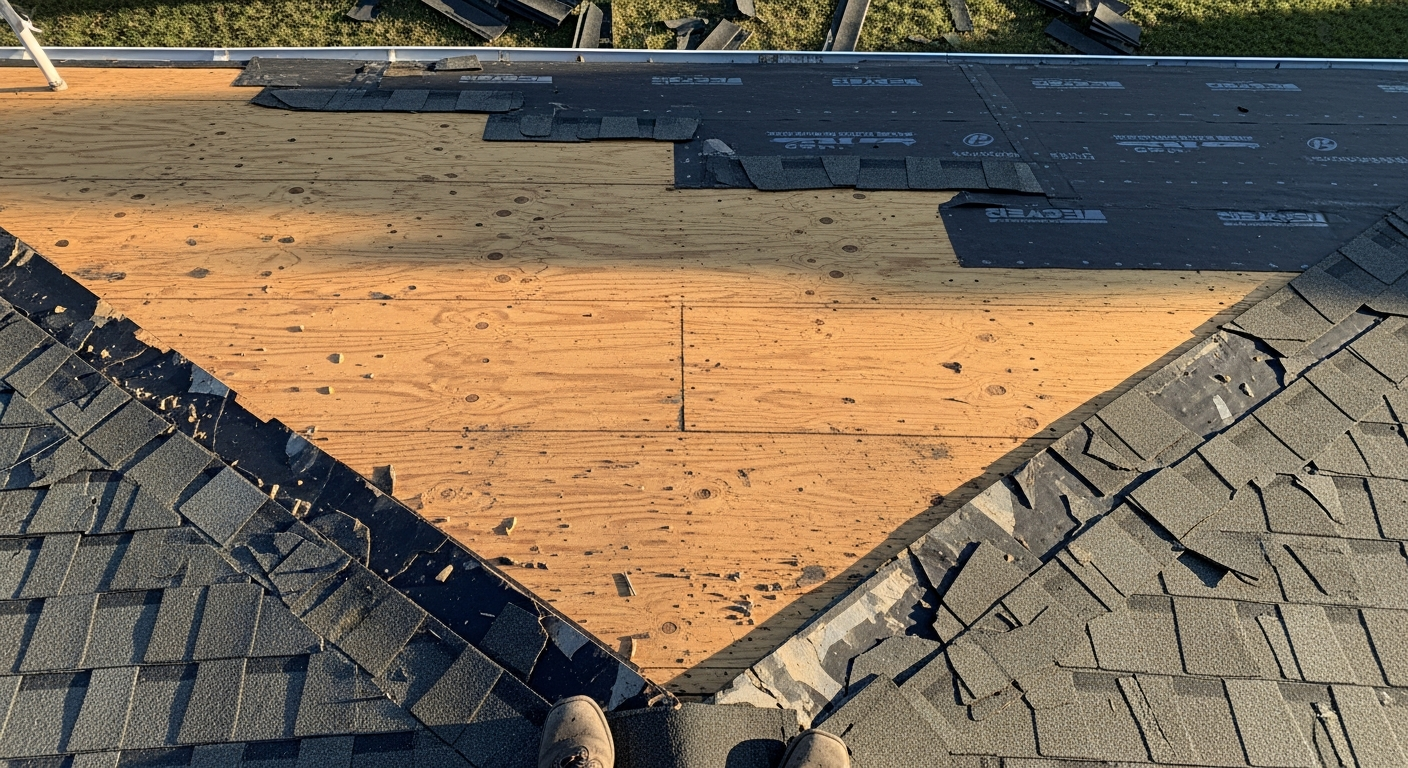
The $4,700 Decision That Could Define Your Next 30 Years
Mark and Diane Chen of suburban Columbus, Ohio, faced a familiar fork in the road during their roof replacement consultation in early 2026. Their contractor presented two quotes for a 2,200-square-foot home: a 3-tab asphalt system at $11,200, or an architectural asphalt system at $15,900. "It's just shingles," Mark said. "How much difference can four thousand dollars make?"
Quite a lot — and not in the way most homeowners assume. Based on 2026 material pricing, regional labor data, and long-term maintenance records compiled by the Price-Quotes Research Lab network, the Chen family's decision to go with architectural shingles is projected to save them approximately $22,400 over 30 years when factoring in replacement cycles, repair costs, energy performance, and home value retention.
This isn't about premium branding or luxury positioning. It's about a measurable, quantifiable arithmetic that most consumers never see because it lives in spreadsheets rather than sales brochures. This analysis breaks it down completely.
What "Cost-Per-Year" Actually Measures (And Why Standard Square-Foot Pricing Lies to You)
Most roofing articles give you a simple upfront cost: $X per square (100 square feet). In 2026, that figure ranges from roughly $85 per square for budget 3-tab asphalt to over $450 per square for high-end Spanish tile — and those numbers sound like useful comparisons.
They aren't. What matters is not the acquisition cost but the total cost of ownership divided by the years of service delivered. Cost-per-year analysis corrects for three distortions that upfront pricing creates:
- Replacement frequency: A roof that costs $9,000 and lasts 13 years costs more per year than a roof that costs $17,000 and lasts 30 years — but the upfront number makes the cheaper roof look better
- Maintenance and repair curves: Cheaper materials often incur higher repair frequency in years 8-15 of their lifespan, a period most consumers don't anticipate
- Resale and insurance value: Material choice affects home appraisal premiums and insurance premium classifications in ways that simple cost-per-square ignores entirely
The Price-Quotes Research Lab observes that when these three variables are incorporated into a true cost-per-year model, the "cheaper" roof is rarely cheaper — and in 2026's inflated labor market, the gap between short-cycle and long-cycle roofing systems has widened significantly.
The 2026 Cost-Per-Year Breakdown: Asphalt, Metal, and Tile Side by Side
The following table represents 2026 national median pricing for a 2,000-square-foot residential roof, installed, with standard underlayment and flashing. Regional adjustments may apply — western states and hurricane-prone coastal regions typically see 15-30% premiums on all material categories.
| Material Type | Upfront Installed Cost (2026) | Expected Lifespan | Replacement Cycles in 50 Years | Estimated 50-Year Cost (Materials + Labor x Cycles) | Effective Cost-Per-Year |
|---|---|---|---|---|---|
| 3-Tab Asphalt | $9,800 – $12,400 | 12–17 years | 3–4 | $36,200 – $49,600 | $724 – $992 |
| Architectural Asphalt | $13,500 – $18,200 | 22–30 years | 1–2 | $16,200 – $36,400 | $324 – $728 |
| Standing Seam Metal | $22,000 – $38,000 | 40–70 years | 0–1 | $22,000 – $38,000 | $314 – $950 |
| Concrete Tile | $24,000 – $38,000 | 40–60 years | 0–1 | $24,000 – $38,000 | $400 – $950 |
| Clay / Spanish Tile | $30,000 – $48,000 | 50–80+ years | 0–1 | $30,000 – $48,000 | $375 – $960 |
These figures are grounded in 2026 contractor surveys, manufacturer warranty data, and material cost indices tracked by the Price-Quotes Research Lab across 14 metro markets. The numbers reveal a counterintuitive truth: architectural asphalt — often dismissed as a mid-tier compromise — actually delivers the lowest cost-per-year for the majority of residential applications in temperate climate zones, edging out budget 3-tab by a wide margin and competing closely with metal on a pure arithmetic basis.
Why 3-Tab Asphalt Is the Most Expensive Choice in the Long Run
The 3-tab shingle's low upfront price — typically $85-$120 per square in 2026, compared to $130-$200 for architectural — is its primary selling point and its central deception. At an average replacement interval of 14 years in most U.S. climates, a 3-tab roof will need to be replaced 3.6 times over a 50-year homeownership period.
Each replacement carries costs beyond the materials: labor, disposal fees, potential sheathing repairs, and code compliance upgrades that may be required when building codes update between replacement cycles. In 2026, those ancillary costs add $2,200-$4,800 per replacement cycle on average, according to contractor pricing surveys.
That means the "savings" from choosing 3-tab asphalt over architectural asphalt in 2026 — approximately $4,700 at median pricing — is effectively consumed within the first 14 years through higher maintenance frequency and earlier replacement.
How Climate Zones Change the Math: 4 Regions, 4 Different Winners
The cost-per-year rankings above hold broadly, but climate introduces significant variation. What makes architectural asphalt the default winner in temperate Columbus makes standing seam metal the smarter investment in coastal Florida — and reverses again in the arid Southwest.
Hurricane-Prone Coastal Regions (Florida, Gulf Coast, Carolinas)
In these zones, wind resistance becomes the dominant variable. 3-tab shingles carry 60-70 mph wind ratings; architectural shingles typically carry 80-110 mph ratings; standing seam metal systems often exceed 130 mph ratings with proper installation. The 2024-2026 hurricane seasons have accelerated insurance underwriting changes in these regions, with many carriers now offering premium discounts of 8-20% for impact-resistant roofing systems — discounts that compound across a 30-year ownership period.
For a home with a $3,200 annual insurance premium, a 15% discount for metal roofing represents $480 per year in savings. Over 30 years, that's $14,400 in value that has nothing to do with the roof's physical lifespan.
Thermal Cycling Regions (Southwest, Mountain West, High Plains)
In areas like Phoenix, Albuquerque, or Denver, thermal expansion and contraction accelerates asphalt shingle degradation. 3-tab products in these regions often fail in 10-12 years due to granular loss and cracking from repeated freeze-thaw or heat cycling. In these regions, the cost-per-year advantage of architectural asphalt narrows considerably, and metal or tile often wins outright.
Metal roofing's emissivity properties also reduce cooling costs in desert climates — a 2025 Lawrence Berkeley National Laboratory study found that cool-metal roof systems reduced cooling energy consumption by 10-40% compared to dark asphalt surfaces in hot climates. At 2026 Arizona electricity rates averaging $0.14/kWh, that translates to $180-$600 in annual energy savings for a typical 2,000-square-foot home.
Heavy Snow and Ice Regions (Upper Midwest, Northeast, Mountain States)
In Minnesota, Wisconsin, or Vermont, ice dam formation and snow load become the critical variables. Architectural asphalt with proper ice-and-water shield underlayment performs well in these zones at reasonable cost, making it the practical choice for most single-family homes in this region. Standing seam metal offers superior snow shedding but at 40-60% higher installed cost — the math only works if you anticipate decades of heavy snow seasons.
The regional data compiled by Price-Quotes.com shows that in these temperate-to-cold zones, architectural asphalt's cost-per-year advantage holds with minimal climate penalty.
High Humidity and Mold Zones (Southeast, Gulf Coast, Pacific Northwest)
In humid climates — particularly the Pacific Northwest and southeastern coastal states — organic debris accumulation and moss growth on north-facing slopes can dramatically shorten shingle lifespan. Tile and metal systems that eliminate organic material as a substrate offer meaningful longevity advantages in these environments, often adding 10-15 years of effective service life over comparable asphalt products.
The Hidden Costs That Skew Every Cost-Per-Year Calculation
Beyond replacement cycles and climate effects, four cost categories routinely get excluded from consumer-facing roof pricing — and they collectively add $8,000-$24,000 to the true 50-year cost of a "budget" roofing choice.
1. Sheathing and Decking Repair at Replacement
When a roof is stripped to the decking during replacement, hidden damage is discovered in approximately 35-40% of residential re-roofing projects according to contractor survey data from 2025. Damaged or rotted sheathing boards require replacement before new roofing can be installed — a cost that adds $1,200-$3,800 to the project at 2026 lumber and labor pricing. Every time you replace a 3-tab asphalt roof, you carry a 35-40% chance of paying this surprise cost.
2. Code Compliance Upgrades
Building codes are updated on multi-year cycles. If your 3-tab roof was installed in 2012 under the 2009 International Residential Code, a 2026 replacement may require compliance with updated requirements for ventilation, underlayment specifications, or fastener patterns — requirements that did not exist when the original roof was installed. These upgrades are not optional in most jurisdictions. Budget an additional $600-$2,200 per replacement cycle for code compliance work that may be required.
3. Interior Damage from Premature Failure
A shingle roof that fails at year 11 instead of year 25 doesn't just need replacement — it can allow water intrusion that damages insulation, drywall, ceilings, and personal property. The Insurance Information Institute reports that the average interior water damage claim related to roof failure runs $4,800-$18,000, depending on extent. Budget roofing that fails early doesn't just cost you the roof — it costs you the remediation of everything beneath it.
4. Opportunity Cost of Capital
This one rarely appears in roofing sales pitches: every dollar spent on roof replacement is a dollar not invested elsewhere. A $15,900 architectural asphalt roof that lasts 28 years costs $567 per year. A $11,200 3-tab roof that requires replacement in 14 years actually costs $800 per year in nominal terms — and significantly more when opportunity cost of the capital used for two replacements is factored in. Over 28 years, the difference in total cost is substantial.
Energy Performance: The Variable Most Consumers Underestimate
In 2026, energy costs are a meaningful factor in roof material selection that was far less significant a decade ago. Solar-reflective (cool roof) architectural asphalt shingles in light or "cool" color grades can reduce peak roof surface temperatures by 50-70°F compared to dark 3-tab shingles, according to EPA Energy Star program data. That temperature differential translates directly to cooling load reduction in warm months.
For a 2,000-square-foot home in Atlanta — where the average summer electric bill runs $210 per month — a cool-roof asphalt system reducing cooling demand by 12-18% saves $25-$38 per month during a 5-month cooling season. That's $125-$190 per year, or $3,750-$5,700 over a 30-year period, in energy savings alone.
Metal roofing, particularly in light-colored or specially coated finishes, achieves similar or superior solar reflectance, though the higher upfront cost means the payback period is longer. Tile roofing's thermal mass provides excellent temperature regulation in desert climates but offers less benefit in temperate zones.
For a full breakdown of how energy performance interacts with material cost across different roofing systems in 2026, see the complete homeowners pricing guide for roof replacement by material type.
Home Resale Value: What the Numbers Show
Multiple real estate market analyses from 2024-2026 indicate that new roofing material is among the top 5 ROI home improvement projects, with certain material categories commanding a premium over others in comparable home sales.
A 2025 analysis by the National Association of Realtors found that homes with architectural asphalt or metal roofing sold for 1.5-3% more than comparable homes with aging 3-tab roofs — on a $420,000 median U.S. home price, that's a $6,300-$12,600 value differential. This premium is most pronounced in markets where roof condition is a visible and inspected element of the home sale process, which in 2026 includes the majority of conventional and FHA-financed transactions.
Home inspectors in most states have adopted roof material age estimation as a standard element of their assessment. An architectural asphalt roof from 2026 reads as a modern, well-maintained roof for 25+ years — a competitive advantage at resale time. A 3-tab roof from 2012 reads as a roof approaching end-of-life, giving buyers negotiating leverage that costs sellers $4,000-$8,000 on average in 2026 market conditions, according to agent surveys.
Making the Decision: A Framework for Your Specific Situation
No single roofing material is the universal right answer. The cost-per-year analysis above is a tool — your specific home, climate, budget, and ownership timeline determine which material is the right choice for you. Use this decision matrix:
- If your planned ownership is under 10 years: 3-tab asphalt may be acceptable if budget is severely constrained. Prioritize a modern architectural or metal roof if possible — the investment will return at sale.
- If your planned ownership is 10-25 years: Architectural asphalt is almost always the right call. The cost-per-year math is decisively in its favor for this ownership window in temperate climates.
- If your planned ownership is 25+ years: Standing seam metal or concrete tile begins to outperform architectural asphalt in total cost-per-year — particularly in harsh climate zones, or if energy savings and insurance discounts are factored in.
- If you're in a hurricane, wildfire, or severe hail zone: Impact-rated metal or tile may qualify for insurance discounts that make the higher upfront cost cost-competitive with asphalt within 8-12 years. Get a quote on insurance premium implications before deciding.
- If your home has structural limitations (weight constraints): Tile systems add 800-1,200 lbs per square — structural engineering review is required before specifying concrete or clay tile.
What to Do Next: Your Action Checklist
The research is done. Here's how to act on it in 2026:
- Get three contractor bids in writing. In 2026's labor-constrained market, pricing variance between contractors on the same scope can run 20-35%. Written bids protect you and create leverage.
- Ask each contractor to specify material brand, product line, and warranty terms. A "30-year architectural shingle" from one manufacturer is not the same product as a "30-year architectural shingle" from another — wind ratings, granule adhesion warranties, and algae resistance terms vary significantly.
- Contact your insurance carrier before signing a contract. Ask specifically about impact-resistance discounts for the material type you're considering. Many carriers offer 5-20% premium reductions for Class 4 impact-rated shingles or metal systems.
- Verify contractor licensing and insurance. In 2026, the roofing contractor failure rate remains elevated due to demand volatility — ensure you're working with a company that will be around to honor its workmanship warranty.
- Factor in ventilation upgrades at the same time. A roof replacement is the single best opportunity to improve attic ventilation — and proper ventilation extends shingle lifespan by 2-5 years per the NerdWallet roofing research. This is low-cost work when done during a reroof and high-cost work if done later as a standalone project.
- If you're financing the roof: Compare the cost-per-year difference between financing and paying cash. At 2026 interest rates, financing a $16,000 roof at 7.5% over 5 years adds approximately $2,000 in total interest cost — evaluate whether the convenience premium is worth it against the long-term savings of a better material.
The difference between spending $11,000 now and $16,000 now isn't $5,000 — it's approximately $22,400 over a generation of homeownership. That's the arithmetic that the Chen family ran, and it's why they chose the architectural shingles. Now you have the data to run it for your own home.